Highstock , a B2B marketplace that helps brands and companies manage slow-moving inventory, has closed a $30 million Series A round led by a16z (Andreessen Horowitz), the prominent Silicon Valley venture capital firm.
As part of the investment, a16z AI partner Olivia Moore will join Highstock's board of directors. a16z investor Jeff Jordan will join as an advisor.
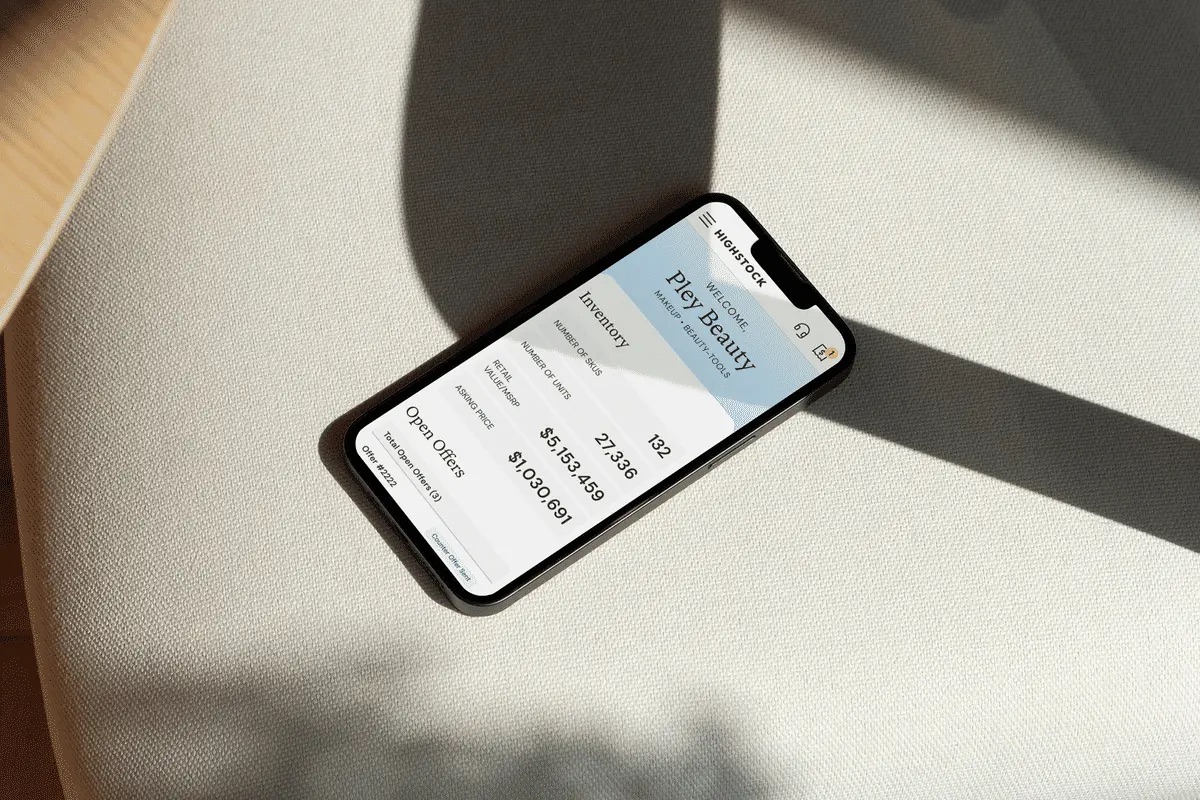
Co-founded in 2024 by Camille van Horne and Ashish Sinha, Highstock uses artificial intelligence to help brands sell excess inventory to vetted business buyers. Specifically, Highstock's business model connects brands with a global network of buyers and livestream e-commerce operators on channels such as Whatnot and TikTok Live, helping brands clear inventory without publicly disrupting their core markets.
In just over a year since launch, more than $1 billion worth of inventory has been listed on the Highstock platform, and it has partnered with more than 100 mainstream brands. About 60% of transaction volume comes from brands and large corporate groups with annual revenue of more than $500 million, including beauty brands such as Laura Geller, Bliss and Versed. International buyers currently account for 40% of Highstock's platform business, spanning livestream sellers and offline retailers.
A new solution for "excess inventory"
Inventory management is becoming a major challenge for brands. Sudden swings in consumer demand, shifts in the supply chain, adjustments to brand positioning and changes in the market environment often leave companies holding large volumes of products they urgently need to offload. The difficulty lies in quickly and efficiently finding the right buyers.
Existing solutions, including discount retailers, middlemen and manual inventory clearance processes, often erode brand value, offer poor information transparency and are riddled with inefficiencies. The vast majority of excess inventory flows to a handful of large discount retailers, which hold strong bargaining power and impose tough terms on brands. But in fact, this market is far more fragmented than it appears; there is still substantial unmet demand overseas, and overseas buyers, constrained by complex customs and regulatory barriers, struggle to secure high-quality goods at good value.
Highstock was created to solve this pain point, and its process works as follows:
- Brands list slow-moving inventory on the Highstock platform
- A vetted network of wholesale buyers submits bids on the goods
- Brands choose the offer they prefer, and Highstock handles the supporting logistics services, including freight, compliance procedures and payment settlement
Within just a few months of launch, Highstock helped more than 50 beauty and personal care brands offer buyers inventory worth a total of $100 million. The platform also helps reduce resource waste, channeling more than 450,000 kilograms of goods to new markets.
In addition, Highstock specifically connects with international buyers. Although buyers get a discount, the goods are sold to overseas markets, so there is no channel conflict of the kind brands worry about.
Then, in February 2025, after nearly six months in operation, Highstock closed a $5.5 million seed round led by venture capital firm Greylock, with participation from Instacart co-founder Max Mullen.
Founded by industry veterans

Above: Camille van Horne, Ashish Sinha
Before founding Highstock, Camille van Horne was a product director at Instacart, the US retail media and delivery company, working directly with thousands of brands and retailers and gaining deep insight into excess inventory issues through customer visits. Earlier, she also worked at Sears, Kmart and others.
Speaking about her motivation for starting the company, Camille van Horne said: "During my time at Instacart, we often visited the warehouses of large consumer packaged goods (CPG) companies, and that was where I first encountered the excess inventory problem. As I was about to leave Instacart, I visited a large snack manufacturer's warehouse and saw large quantities of snacks that were still perfectly sellable about to be shipped to what they called the 'tank' — a nice way of saying they were going to be destroyed. That moment made me realize that many brands lack suitable channels for handling near-expiry and outdated products, resulting in enormous waste."
Ashish Sinha was a colleague of Camille van Horne at Instacart. At the same time, his family has run a footwear business in India for 30 years, and disposing of slow-moving inventory is part of daily operations. As a result, Ashish Sinha knows the industry inside out and has seen how information opacity creates an imbalance in bargaining positions. During a six-month pandemic lockdown in India, buyers who had previously purchased and distributed his family's products at wholesale prices gained the upper hand in negotiations, acquiring millions of dollars' worth of inventory at almost zero cost. That experience drove Ashish Sinha to use technology to build a fairer global trading environment.
The company started with the personal care category because it involves shelf-life management, which aligns with the two founders' experience handling food inventory at Instacart.
After the latest funding round, Highstock plans to expand into the apparel and fashion category.
Highstock founder Camille van Horne said: "We have already achieved solid results in beauty and personal care. The market for disposing of excess apparel inventory is five times the size of the beauty excess inventory market. The apparel industry inherently has a waste problem, rooted in seasonal new arrivals. The triggers for excess inventory in beauty are different, mainly shelf-life issues; many partner brands' products have less than 18 months of shelf life remaining, and traditional retailers won't accept such goods."
|Source: official press release, Fortune, Beauty Independent
|Image credit: brand official websites
|Editor: LuxeCO