On September 2, global lifestyle apparel group Kontoor Brands, Inc. (NYSE: KTB) announced the long-term growth strategy and 2030 financial targets for the Norwegian premium outdoor brand Helly Hansen, which was officially brought under its umbrella in June last year.
The group's latest plan aims to drive Helly Hansen's global business expansion and significantly improve profitability by 2030. As of fiscal 2025, Helly Hansen's full-year revenue was $675 million, with DTC revenue accounting for 25%.
Scott Baxter, CEO and Chairman of the Board of Kontoor Brands, said: "With 150 years of technical heritage and enviable global growth advantages, Helly Hansen is a brand with enormous long-term growth potential. The strong alignment between our teams has enabled a rapid integration, and we are directly addressing the immediate opportunities at hand. Our continued investment in Helly Hansen will be the catalyst for the brand's next phase of growth, and we are confident in creating substantial value for consumers, employees and shareholders in the years ahead."
At the Investor Day event, Kontoor Brands President and Chief Financial Officer Joe Alkire, Helly Hansen Global Lead Børre Hegbom, Helly Hansen Global Finance and Operations Lead Erinn Murphy, and Kontoor Global Brand, Operations and Finance Lead Mike Karapetian elaborated on the strategy in turn.
Driving annual revenue above $1.1 billion over the next five years
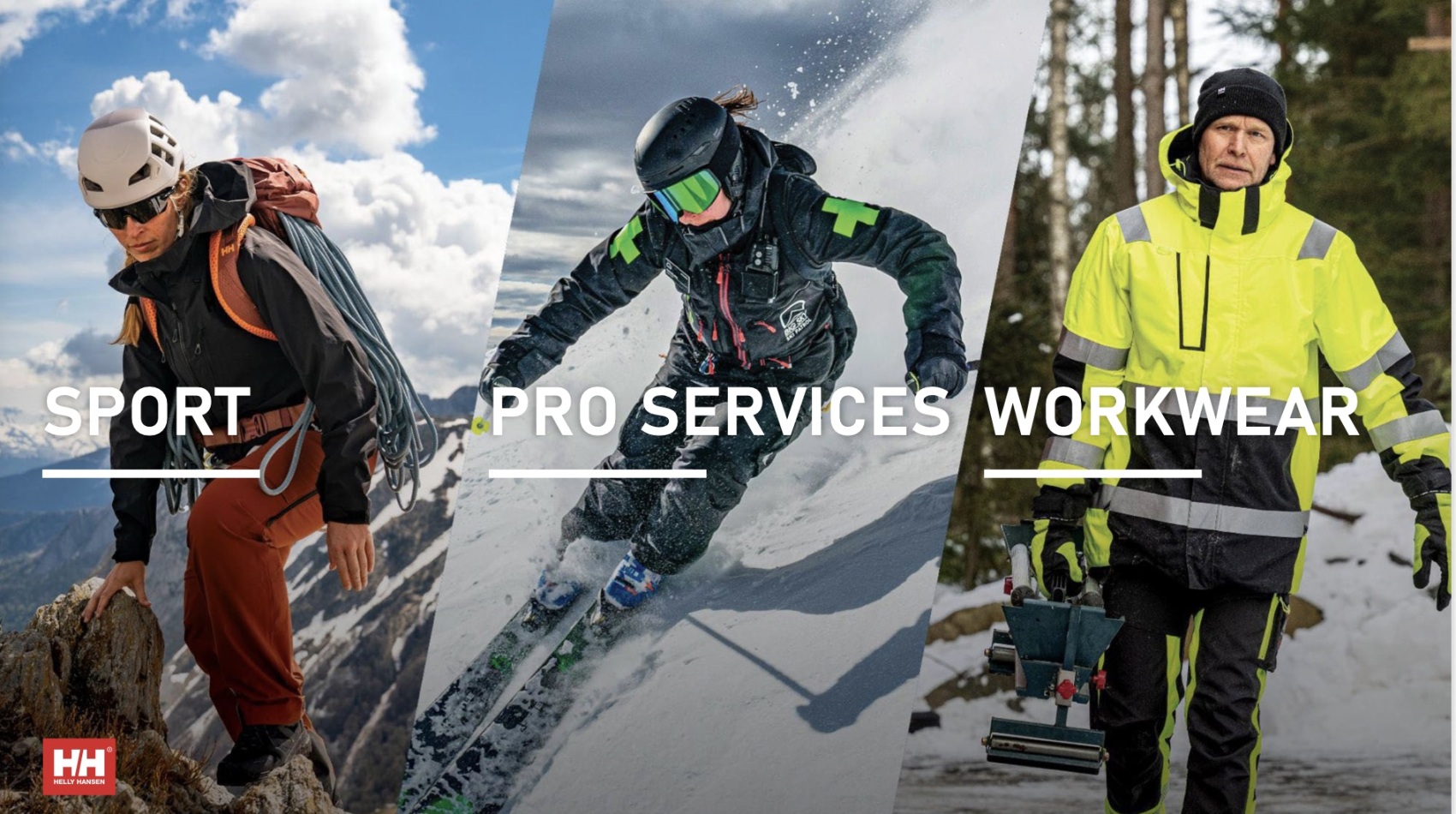
Kontoor Brands wants Helly Hansen to achieve the following by 2030:
- Revenue above $1.1 billion, representing a compound annual growth rate of approximately 10% compared with the estimated $675 million in fiscal 2025
- Gross margin in the 55%–59% range
- Operating margin in the 14%–16% range
- Cumulative cash generation of more than $500 million by 2030
Kontoor Brands President and Chief Financial Officer Joe Alkire said: "We believe Helly Hansen is one of the most attractive opportunities in consumer retail today. Helly Hansen is broadening its consumer base and category boundaries and is poised for accelerated growth over the next decade. This growth, combined with margin expansion and consistent cash generation, will enhance Kontoor's profitability, support a balanced total shareholder return and broaden our capital allocation options."
Going forward, Helly Hansen will focus on a focused growth strategy built around three strategic pillars:
- Strengthen the US market: Achieve balanced growth through strategic wholesale expansion and DTC, raising brand awareness and distribution scale in Helly Hansen's most important incremental market.
- Win in premium outdoor: Compete in the premium outdoor market year-round, leveraging Helly Hansen's leadership in winter sports and sailing to expand into adjacent technical outdoor categories where the brand already has credibility.
- Empower the workwear business: Leverage Helly Hansen's professional-grade product strength and Kontoor's regional operating capabilities to expand the proven, profitable European workwear business into North America.
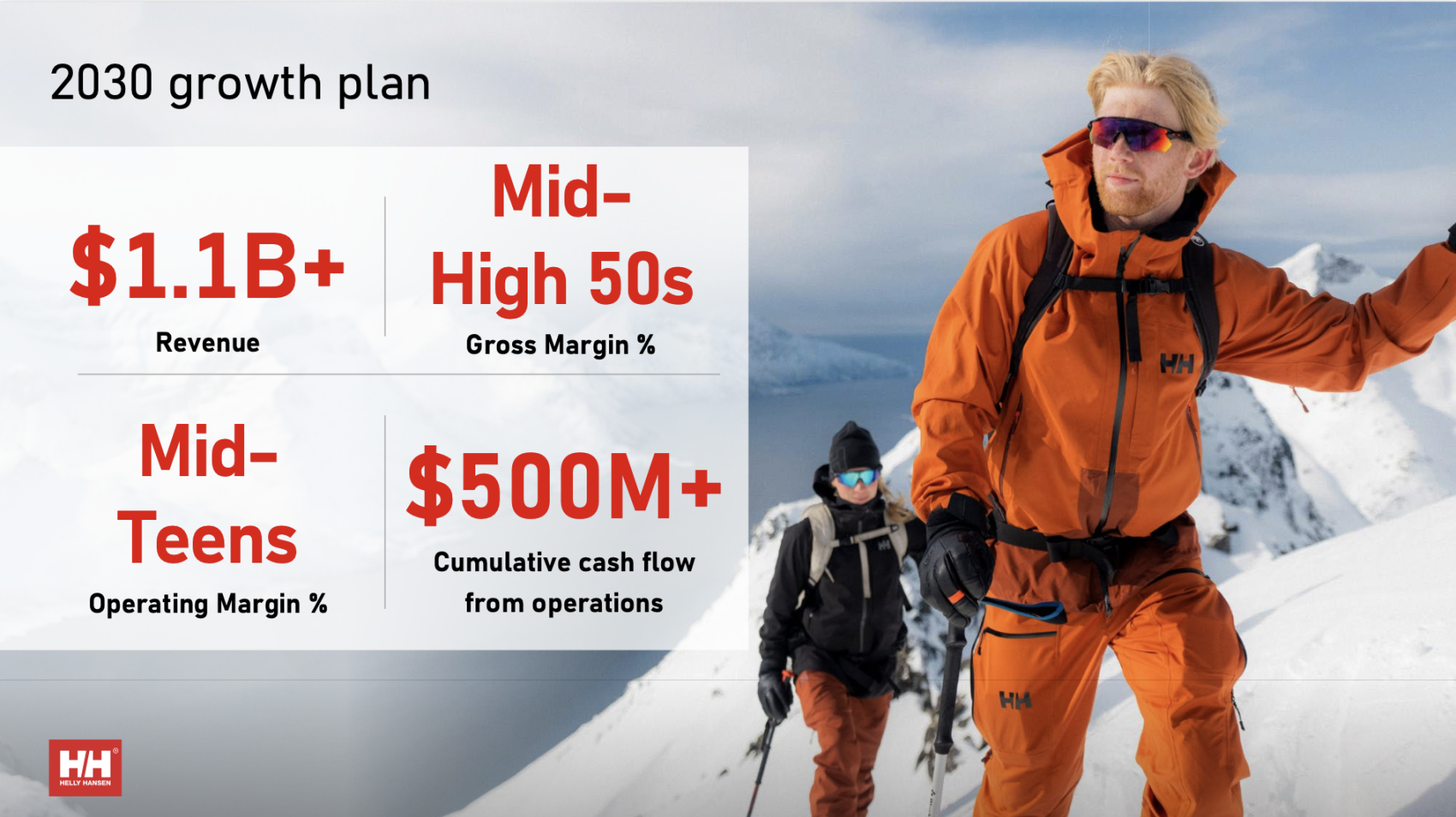
Joe Alkire noted that technical outdoor and workwear are the two core segments of Helly Hansen's business, where enormous opportunities lie. "We have already established brand credibility and have differentiated advantages to win. These three initiatives cover the vast majority of our growth sources in the five-year plan."
Joe Alkire further added that as "early investments begin to release scale effects," growth is expected to exceed 10% in the latter part of the five-year plan. He mentioned that operating margin improvement will come from "significant gross margin expansion, optimized operating controls and increased brand investment."
Anchored by the dual pillars of "premium outdoor" + "workwear"
Børre Hegbom said: "Helly Hansen is transitioning from a European technical brand to a leading global premium technical brand. We have brand credibility and consumer trust, the foundation to win, and the core focus now is scaling the business. We are deepening our US presence, consolidating our position in the Alps, and growing in outdoor and workwear, where the opportunities are greatest."
Speaking at the event, Børre Hegbom noted that Helly Hansen's core strengths stem from its brand heritage. The brand will celebrate its 150th anniversary in 2027, and "we are one of the oldest brands in the industry today."
Secondly, another highlight of Helly Hansen is its innovation capability and Norwegian design. Børre Hegbom explained that Helly Hansen was the first brand to launch synthetic insulated mid-layers in the 1960s and the first to introduce synthetic base layers in the 1970s.
Børre Hegbom said: "What sets Helly Hansen apart from competitors is the arena we play in. Most outdoor brands have been to the South Pole, the North Pole and Everest, and so have we. But we are one of the very few brands deeply rooted in the world's harshest environment — the ocean. That is an entirely different set of challenges. Products are tested not just by rain and snow, but by relentless saltwater waves, which is why we have built some of the industry's best products today."
Helly Hansen Global Finance and Operations Lead Erinn Murphy said the brand has the opportunity to further raise brand awareness and attract more potential consumers. She noted that aided brand awareness in the US is around 30%, "far below global leading competitors in the category; unaided awareness is only 3%."
Erinn Murphy noted that Helly Hansen's five-year plan calls for doubling marketing investment by 2030, while shifting the marketing approach from a product-performance focus to brand building. "Before Kontoor's acquisition, on average 70% of our marketing budget went to product performance promotion; now we are reversing that ratio. The marketing model is also shifting from fragmented coverage of multiple categories and SKUs to telling a complete brand story around categories. The marketing team structure is also being adjusted, splitting from a single centralized team into two independent marketing teams for sport and workwear."

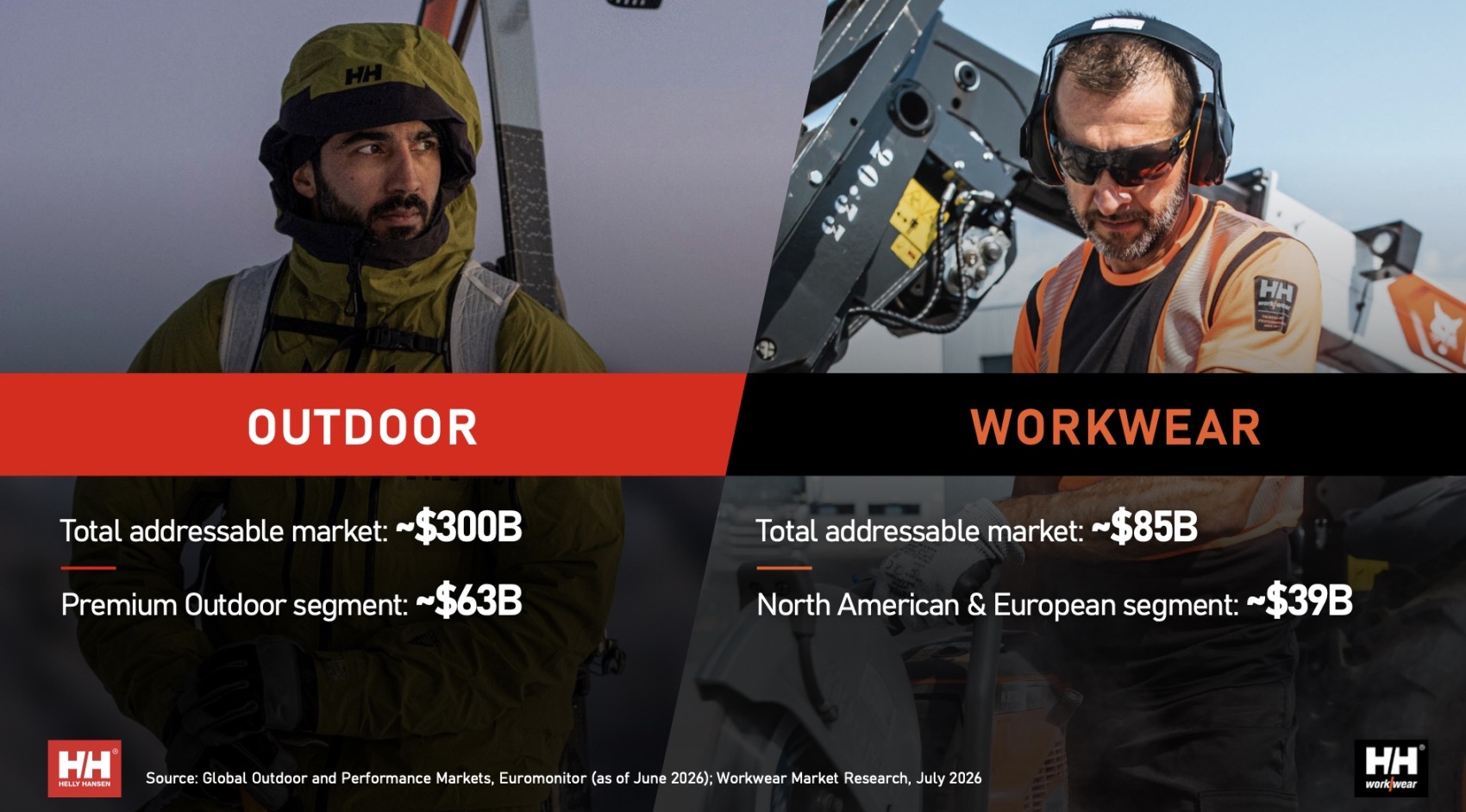
Drawing on consumer research, Erinn Murphy outlined Helly Hansen's growth space in outdoor and workwear. Outdoor/sport accounts for 75% of Helly Hansen's overall business, and workwear 25%.
The global outdoor market is worth more than $300 billion, and Helly Hansen primarily targets the premium segment of just over $60 billion. The global workwear market is worth $85 billion; Helly Hansen aims to gain a foothold in North America while continuing to grow in Europe.
Helly Hansen noted that the premium outdoor markets in the US, Europe and China are $20 billion, $14 billion and $9 billion respectively, and Helly Hansen's market shares in these three markets are 1.2%, 2.6% and 1.1% respectively.
Erinn Murphy listed multiple structural tailwinds driving the technical outdoor segment: "First, the segment is innovation-intensive with premium pricing and is expected to deliver substantial margins over the long term. Second, it is a market built around sports occasions, with participation in hiking, climbing, trail running and other outdoor activities continuing to rise, forming a global trend and cultivating a highly loyal repeat customer base. Third, it is the fastest-growing segment of the outdoor industry, with a projected compound annual growth rate of 6% through 2030. Finally, this segment helps us expand year-round wearing occasions and deepen our connection with consumers."
Extensive consumer research in Europe and the US shows that Helly Hansen has attracted "a highly engaged community of sports enthusiasts." The brand has 55,000 professional partners, including athletes such as the Norwegian Alpine Ski Team, fishermen, search and rescue personnel, mountain guides and ski resort staff; 20% of core consumers learned about Helly Hansen through this group.
"Our customers value product performance. Professional performance is the top purchase criterion. As expected, our users are sports enthusiasts: they ski more than 16 days a year on average and maintain year-round activity habits. 75% of core consumers participate in at least three technical outdoor activities," Erinn Murphy noted.
Among them, 75% of core consumers hike, and more than 50% participate in trail running.
Mike Karapetian said that over the past decade, by focusing on skiing and sailing, Helly Hansen has doubled its outdoor business. "The strategy has worked, and today we hold 1% and 4% market share in the two segments respectively, both at the top of their categories. Now we are building a third growth pillar."
Following the same logic as skiing and sailing, Helly Hansen will target professional audiences in trail running, hiking, backpacking and climbing to penetrate the broader outdoor market. "The technical outdoor segment is about three times the size of the ski market, so even a small gain in market share can bring substantial revenue growth. Each 1 percentage point of market share gain in technical outdoor corresponds to more than $400 million in incremental revenue, almost equivalent to our entire global planned increment."
To capture the broad technical outdoor opportunity, Mike Karapetian mentioned two key actions: appointing Helly Hansen's first North America General Manager and continuing to increase investment in the product team and marketing. "In the short term, we will increase marketing spend to build brand awareness, then return to a reasonable investment level in the latter part of the planning period; wholesale and DTC channels will expand prudently in parallel, with moderate store expansion and increased digital investment. Pace is critical: talent and product first, then marketing, and finally channel distribution."
In workwear, Helly Hansen has already achieved great success in the Nordic market, with the workwear business growing rapidly in recent years and now roughly on par with the sport business. Drawing on the playbook used in the Nordic market a decade ago, Kontoor plans to appoint a dedicated North America lead for the workwear business to unlock US workwear growth.
Mike Karapetian said: "We want to replicate this model globally, prioritizing the US. A small gain in US workwear market share can translate into significant revenue. As with the sport business, talent comes first: build a dedicated workwear team, develop a product line tailored to the US market to complement the existing global offering, increase marketing investment and upgrade the digital platform."
Meanwhile, in workwear, the North American and European workwear markets are expected to grow 6% over the next five years, and Helly Hansen will focus on these two markets.
"We have already built credibility in the extremely harsh Nordic market. The workwear segment also has strong tailwinds. As you can see in the news, the US workwear industry in particular is undergoing a reshaping. With higher education costs rising, more people are forgoing college and choosing other paths, vocational and technical school enrollment queues often run for years, and construction is booming," Erinn Murphy said.
"In the sport segment, the short-term growth drivers remain the two core categories of skiing and sailing; as the new product matrix launches, growth in the broader technical outdoor business will gradually accelerate. In workwear, we will first complete team building and roll out the innovative product roadmap, then achieve steady and orderly growth in the coming years," Mike Karapetian further noted.

With the US market at the core, shoring up global growth
Currently, 30% of Helly Hansen's revenue comes from the US, with most of the remaining sales contributed by Europe. Helly Hansen Global Lead Børre Hegbom noted that US sales reach $150 million, "already our largest and fastest-growing country market." Although Helly Hansen has established a foothold and become "one of the best-performing European outdoor brands in the US market," it is "still small compared with leading US domestic players, which is exactly where we will focus our efforts next."
Børre Hegbom emphasized that 60% of Helly Hansen's growth over the next five years will come from the US market. Overall, Kontoor expects Helly Hansen's US business to reach at least $500 million by 2030, with a compound annual growth rate above 20%; the rest of the global markets will maintain mid-single-digit growth.
Kontoor Global Brand, Operations and Finance Lead Mike Karapetian said the group aims to grow Helly Hansen's US business to "at least $500 million, with both premium outdoor and workwear contributing substantial revenue."
One new initiative to drive US growth is the appointment of C.J. King as Helly Hansen's first North America General Manager. The executive spent the past decade in management roles at Arc'teryx North America, most recently as Vice President of North America Wholesale.
Børre Hegbom explained that Helly Hansen's US channel structure is very healthy, with wholesale accounting for 55% and DTC 45%. The brand will not change this ratio but will expand both channels simultaneously; of the five-year growth, 45%–50% will come from wholesale and 50%–55% from DTC.
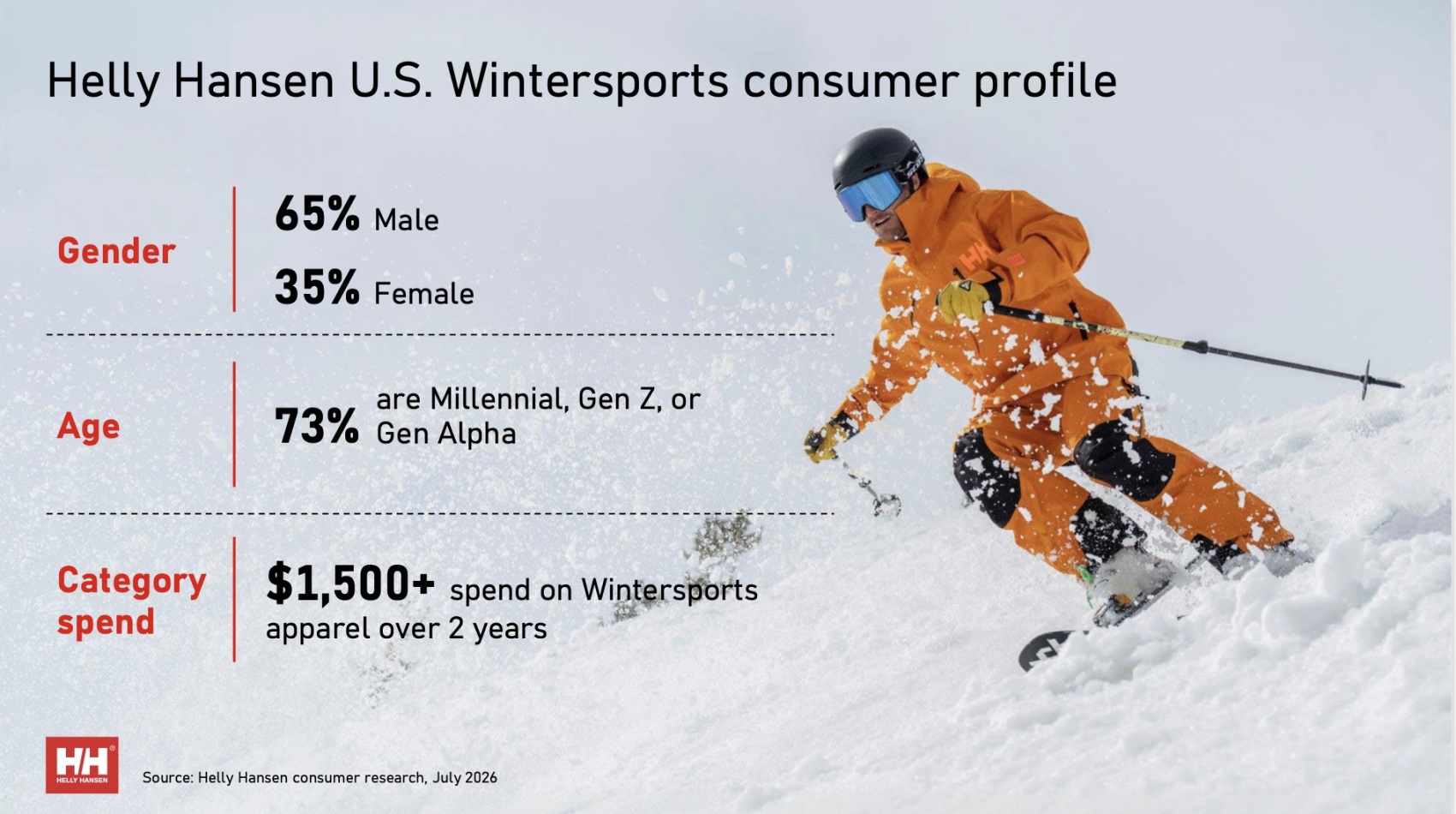
Kontoor's research shows that Helly Hansen's US customer base is predominantly male, but female consumers also account for a considerable share. 73% of US consumers are under 43, a high-spending group in the category, spending an average of $1,500 on winter sports over two years.
The research surveyed US consumers who had purchased winter sports gear in the past 24 months. Consumers prioritize four factors when buying: product performance, a trusted brand, warmth and weather protection. Compared with other leading technical outdoor brands, Helly Hansen scores highest on trustworthiness and warmth. Erinn Murphy said: "The conclusion is clear. Although our brand is smaller than multibillion-dollar peers, we have achieved high recognition on the purchase decision dimensions consumers value most, and that is our confidence to win."
Børre Hegbom also mentioned that for the past decade he had managed the US business remotely from Norway. Now, Helly Hansen will deepen its focus on specialized niche partner accounts in the US and increase its presence with key large accounts, namely national retail chains. The core idea is to raise brand awareness and win large channel customers. At present, Helly Hansen is in a limited number of national chain stores, with a target of raising store penetration to 25%–35%.
Helly Hansen plans to double its e-commerce business by 2030, with the core aim of turning its brand website into a "premium destination for full-price merchandise." "We will build a seamless omnichannel experience, strengthen capabilities and improve repeat purchases, brand loyalty and customer lifetime value. E-commerce is crucial to the US market, which is already our largest e-commerce region," Børre Hegbom said.
In physical retail, Helly Hansen currently has 12 stores in the US, mostly in ski and sailing destinations. Børre Hegbom noted: "We do not plan to open stores on a large scale in the US, but rather a select few in the best locations."
Børre Hegbom believes that Kontoor's acquisition of Helly Hansen will bring huge benefits to the brand. He recalled that during his 22 years at Helly Hansen, the brand's majority controlling shareholders were mostly private equity firms, which "were relatively conservative in terms of investment." Even so, Helly Hansen achieved high-single-digit growth over the past 17 years, and he expects Kontoor to help the brand accelerate further in the future.
Speaking of Kontoor, Børre Hegbom said: "They understand this business, and we share the same philosophy. As a US local expert, they can genuinely empower our US market. We can access Kontoor's multi-brand platform, which is a huge advantage for us, and they understand that accelerating growth requires continued investment. I have worked here for 22 years, and this acquisition is truly a game-changing turning point for Helly Hansen and all its employees; we have entered a new era."
Outside the US, Helly Hansen is focusing on the Alps. "Why the Alps? It is the largest outdoor market in Europe, with four-season business opportunities that align closely with our positioning. It is already Europe's number one ski market, and we have deep roots in skiing," Børre Hegbom explained.
Helly Hansen also noted that China is a market with untapped potential (Unlocking) and an additional growth driver for the brand. In 2020, the brand signed a ten-year cooperation agreement with local apparel group Youngor Group to form a joint venture (50/50) to operate the local market. Initially, the brand entered the market positioned as a sailing brand, and has since expanded into outdoor. Currently, the brand's products are produced in China, with regional design centers in Korea, Osaka and Shanghai, and its store count has grown from about 90 in 2025 to more than 130 in 2026.
In China, Helly Hansen maintains a premium positioning, with market pricing 30%–40% higher than in Europe. At the same time, the brand says China is a single-brand-store, retail-driven market and has become an important growth engine. In 2025, the brand's China revenue was about $100 million, and revenue grew more than 80% in the first half of 2026.

|Source: Official press release, SGB Media
|Image source: Brand official website
|Editor: LuxeCO