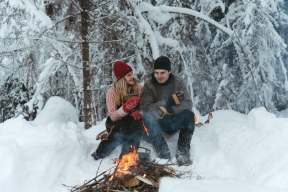
“We travel north from the Arctic Circle, searching for the most beautiful landscapes in Norway. Only 15 places meet our requirements—they must be at the end of a road or on an island; there must be mountains nearby and the sea; it must be magnificent natural scenery, and sparsely populated. We plan to build destinations in five of them, something others can never replicate.”
Mr. Jørgen Jørgensen, CEO of Norwegian high-end outdoor brand Norrøna, described to LuxeCO his criteria for selecting destinations for the brand's adventure travel project Norrøna Adventure.

Spending over 150 days outdoors each year, Jørgen Jørgensen visited China again after 15 years and gave his first interview to Chinese media. He chatted with LuxeCO in Shanghai for nearly two hours. In our conversation, we saw a vivid portrait of an atypical brand leader:
Growing up between nature and the family workshop, he retains an innate passion for nature, loves to play, understands the outdoors, is highly sensitive to products, and enjoys all creative activities. As the fourth-generation leader of the family, Jørgen Jørgensen inherited the name of the brand's founder (hereinafter referred to as J.J), and also possesses an extraordinary founder's spirit: brave, pioneering, daring to forge his own path of innovation, truly taking Norrøna from Norway to the world, and now moving from an outdoor apparel brand to a comprehensive nature experience brand.

Above: J.J outdoors (2005)
Brand Identity and Product Portfolio: Embodying the Viking Outdoor Spirit
In 1929, outdoor enthusiast Jørgen Jørgensen founded J.J Norrøna Sports Goods and Leather Factory, aiming to make the company the highest standard for outdoor products, creating high-quality, durable outdoor gear to withstand Norway's harsh natural environment.
He used the image of the Birch Legs warriors—the king's guards symbolizing mountain endurance—combined with shield and ski elements, as well as the initials “J.J” and the Old Norse word “Norrøna” from the Viking era, to encapsulate the Viking outdoor spirit in this logo.

“In Norway, you can never predict the weather. If you plan to go out but keep waiting for good weather, you might never leave the house. So you have to get used to it from a very young age—depart tomorrow, dress according to the weather, and no matter what, you must get things done.” J.J, who inherited his great-grandfather's name, told us.

Above: Evolution of the Norrøna logo
During the outdoor exploration boom of the 1970s, J.J's father Ole Jørgen Jørgensen and his product engineering team initiated the “extreme user-driven product development” model:
They boldly introduced Gore-Tex, which had just begun commercial orders, to create Europe's first Gore-Tex hardshell, and took the first-generation prototype to Norway's “Trollveggen” (Troll Wall)—one of Europe's highest vertical rock faces—for field testing, and the product was named after it. In the 1980s, Norrøna supported explorers in completing milestone climbs several times, and its product performance was frequently verified in extreme environments.

Above: Europe's first Gore-Tex hardshell, created by Norrøna in 1977

Above: 1980, first winter ascent of the Swedish Route

Above: 1984, four explorers completed the Great Trango Tower expedition
When J.J, who is passionate about outdoor products and sports, took over R&D in the early 2000s, he further upgraded the entire system and design philosophy.
LuxeCO: Norrøna has created many classic product lines. Please choose one and share the complete process from inspiration to launch to iteration.
J.J: In 2001, I had just taken over product development. Freeride was an emerging trend at the time, but we found there was no dedicated clothing on the market, so we saw an opportunity and developed the lofoten series.
There were three key points in developing this series: First, brand ambassadors were deeply involved in R&D, articulating their initial needs, and I hand-sketched designs for the designers; at the same time, we established the core design philosophy Loaded Minimalism™, which runs through all products; we also revolutionized the traditional R&D model dominated by a single designer, opening up the process and involving a large number of young designers.

Above: Norrøna lofoten series
This was a garment that completely rewrote the freeride landscape: bright color design, using the latest and ultra-durable Gore-Tex fabric at the time, adding waterproof performance, and reinforced shoulders following traditional mountaineering craftsmanship.
The second generation of lofoten was launched 3 years later, because the new Gore-Tex Pro Shell fabric came out. In the early years, we iterated products annually, but now we adjust to every four years. You need market feedback and long-term user experience to refine a more complete new generation.

Above: The latest The lofoten Gore-Tex Pro men's jacket
LuxeCO: What internal principles does the brand's product portfolio follow?
J.J: We divide products into series based on five core scenarios and other activities, like different teams, each with its own style, suitable for different extreme users. We also consider year-round usage scenarios, focusing on one sport each month.
We don't want to make competitive gear, so we don't get involved in competitive sports; instead, we promote experiencing nature. All the outdoor activities we engage in are built around the concept of “enjoying nature alone or with friends, competing with yourself rather than others.”

LuxeCO: On the brand's official website, customers can search for products by color. What is the philosophy behind this color system?
J.J: These colors certainly have different meanings. First, safety: when climbing on black rock faces, wearing bright colors makes it easier for rescue teams to spot you in an emergency; when skiing in heavy snow in winter, bright colors lift your mood. We also create seasonal colors to create vibrancy and uniqueness, produced in small limited batches—the brighter the color, the smaller the production run.

Above: Norrøna's color palette
We want color to be part of the design expression—not following trends, but creating our own unique colors. We have now developed a complete color system, not just bright colors, but a full spectrum.

Global Expansion and Re-entering China
In 2009, under J.J's leadership, Norrøna opened its first brand store in Oslo, 80 years after the brand was founded. In 2011, the brand opened a store in Stockholm, stepping outside Norway for the first time.
Currently, Norrøna has 40 directly operated physical stores worldwide, located in Norway, Sweden, Finland, the United States, Germany, France, Italy, and Switzerland.

Above: Norrøna's global store layout (including direct-operated, wholesale, and outlet stores)
In 2016, Norrøna tested the Chinese market but exited in 2018. In May 2025, Norrøna announced a partnership with Chinese sports retail operator TOPSPORTS Topsports as the brand's exclusive operating partner in the Chinese market. Topsports will fully lead Norrøna's brand communication, marketing activities, omnichannel sales, and user operations in China.
In October 2025, Norrøna officially returned to the Chinese market, simultaneously opening its official Tmall flagship store and a pop-up experience space at Kerry Parkside in Pudong, Shanghai. In January this year, Norrøna opened its first long-term store at Beijing SKP.
J.J, along with core team members who have worked with him for over 20 years, visited Beijing, Shanghai, and Nanjing, witnessing the tremendous changes and potential in China's high-end retail market and the outdoor sports industry.
LuxeCO: What changes do you see happening in the Chinese market?
J.J: I went to Shanghai in 2011, and the outdoor stores looked completely different from now. I think China is one of the world's leading retail markets, with brand stores developing particularly rapidly, and the outdoor industry as well.
Chinese consumers' awareness of the outdoors and their pursuit of high-quality outdoor gear have significantly improved. I am delighted to see Chinese consumers' desire for high-end outdoor products, and I appreciate it—we are positioned in the premium market ourselves.

Above: Norrøna Beijing SKP store
LuxeCO: The Chinese outdoor market is highly competitive. What is Norrøna's differentiated competitive advantage?
J.J: Our goal is to become the world's top outdoor brand—not the largest, but the most technical and high-end brand.
I think one cool thing about the Chinese market is that consumers are willing to invest in high-end products. Chinese consumers greatly appreciate craftsmanship and quality, value the effort we put into our products, and are willing to pay for it, which is very important to us.

Above: Norrøna Beijing SKP store
LuxeCO: What do you think is a healthy scale and growth rate for the brand?
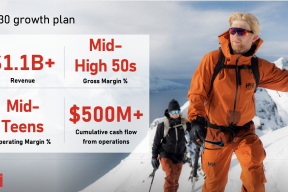
J.J: I think the ideal scale is slightly larger than now. We could easily double our current size. But in the long term, a healthier growth rate is between 10% and 20%.
The important thing is that we sell the right products to the right people in the right way. Therefore, if it's not high-quality, sustainable growth, we'd rather not have it. If we have to sell in the wrong way, we'd rather not do it.

Both Heir and Pioneer: Norrøna Adventure
Since its founding, Norrøna has been 100% owned and operated by the Jørgensen family. J.J remembers doing inventory counts from the age of five, and later became curious about the sewing machines around him and started making his own products—starting with headbands, then other gear.
“During school, I started doing a lot of stock trading, so I hesitated: should I take this path or that path? But then I realized that my motivation is—when I wake up every morning, what I want to do is 'create things'. So after completing my finance degree, I worked at a multi-brand retail store, responsible for purchasing and other tasks. Interestingly, I was the first person to sell Norrøna products.” J.J shared about his upbringing.

Above: Jørgen Jørgensen at the company (2015)
Today, Norrøna is not a large company, with over 120 people from more than 20 countries, mostly working at Norrøna House just outside Oslo. “When people communicate face-to-face, it's much easier to build a corporate culture.” J.J said, “We draw inspiration from around the world, but at the same time we strive to remain different and preserve our Norwegian heritage.”

In 2019, J.J made an even bolder decision: to enter the tourism industry. Norrøna acquired Hvitserk, a Norwegian high-end travel company with nearly 40 years of history, and founded Norrøna Adventure, later acquiring the Norwegian luxury mountain bike hotel Canvas Hotel.
At the time, there were voices of opposition within the company, but he thought more broadly and long-term: not just retail, and not treating the travel business as a side business, but fully integrating it into the brand's core development philosophy, building a complete platform and creating a comprehensive lifestyle experience.

Leveraging the acquired existing customer base and mature travel routes, Norrøna Adventure has progressed smoothly and has now opened boutique travel routes in dozens of countries worldwide. Travelers can stay in yurt-style tents at Canvas Hotel in the Telemark highlands of Norway, hike in the Lofoten Islands to experience the stunning scenery of Norwegian fjords, or sail on the Norrøna Varg sailboat—the Norrøna Varg S/Y sailboat was also named one of the “World's Greatest Places” by TIME in 2026.
Jørgen Jørgensen told LuxeCO: Just making the best products is not enough; we must also provide consumers with adventure experiences. Our vision is: “Welcome to nature.”


|Image source: Norrøna
|Editor: Xiaoyue