As the athleisure and outdoor trend sweeps the market, the fashion women's footwear category, which once occupied entire floors in department stores, is undergoing a profound "reshuffle." According to data from the China Leather Industry Association, China's leather shoe production has plummeted from 4.62 billion pairs in 2015 to 3.54 billion pairs in 2020, and may further shrink to 1.7 billion pairs by 2026—a decline of over 60% in just over a decade.
As "comfort" replaces "good looks" as women's top priority when choosing shoes, traditional women's footwear brands have generally fallen into a growth dilemma. Many fashion women's footwear brands that once positioned themselves in the domestic mid-to-high-end segment have resorted to "trading price for volume," choosing a strategy of brand downgrading. However, KISSCAT, a women's footwear brand under Tianchuang Fashion with nearly 30 years of history KISSCAT, has completed a comprehensive brand transformation and upgrade amid this industry upheaval, achieving growth in both average selling price and profitability against the trend.

Three years ago, KISSCAT launched a top-down systematic reform, upgrading and restructuring consumer insights, R&D systems and supply chain, brand marketing, and omnichannel retail. On one hand, the brand opened up a new "casual sneaker" category that combines fashion aesthetics with comfort; on the other, it drove the improvement and iteration of traditional fashion shoes, delivering impressive results:
- In 2025, the average retail price of new products increased by 10%, the gross margin of new products grew by 7pp, and brand operating profit increased by 102%, with profitability significantly improved. This momentum continued into 2026;
- The "casual sneaker" category successfully broke through, with its sales share jumping from 5% two years ago to nearly 50%, becoming a new growth pillar for the brand;
- Improved store efficiency accelerated the renewal of terminal stores. New-generation stores saw new customer growth exceeding 50%, the average age of users dropped by nearly 10 years, and store efficiency increased by 40% compared to traditional stores.

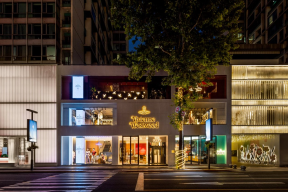
Above: KISSCAT's new-generation "Oasis" store at Wuhan MixC
What deeper needs do changes in user demand reflect? How did KISSCAT identify innovation opportunities in the "headwind" and stay in sync with users? What deep R&D and supply chain foundations are supporting the brand as it tackles challenges head-on?
With these questions in mind, LuxeCO exclusively interviewed Wu Jing, COO of Tianchuang Fashion and General Manager of KISSCAT, to unpack the business logic behind this brand transformation.
Step One of Reform: Understanding Chinese Women's Real "Shoe-Wearing" Needs
Wu Jing joined Tianchuang Fashion Group in 2008 and has witnessed the industry's ups and downs for nearly 20 years. Speaking about the industry changes over the past decade, she was particularly direct: "It felt stuck—unable to go up, unable to come down, no growth in sight, and everyone was confused." She noted that reform was imperative, but the direction was not simply pursuing scale and speed. The company therefore established the fundamental principle of "high-quality development," improving product and operational quality so that users could enjoy a better brand experience.
To move the brand "upward," the core is product upgrading. And the first step of KISSCAT's reform landed on the starting point of merchandise planning—consumer insights.
Founded in 1998, KISSCAT has witnessed the footsteps of many Chinese women from campus to the workplace, and then to starting families. Nearly 30 years of development have allowed the brand to accumulate real feedback and valuable data from two generations of Chinese female consumers. Since 2010, KISSCAT has collaborated with the China Leather and Footwear Industry Research Institute to establish the "KISSCAT Chinese Women's Foot Shape Comfort Research and Technology Development Center," further expanding the data sample and solidifying the foundation of the brand's proprietary "last library," continuously exploring the balance between aesthetics and comfort in women's shoes.
However, understanding Chinese women's real "shoe-wearing" needs requires more than data; insights into their life scenarios, consumer mindset, and aesthetic preferences are particularly crucial. Wu Jing stated: "User insight is a process that requires long-term accumulation; it cannot be achieved overnight. This is also the wisdom barrier KISSCAT has built over nearly 30 years. Brand upgrading must build on the past and open up the future—the needs of existing users must be met first."
With this approach, KISSCAT conducted a round of in-depth, detailed research on its "Blue Whale users" (SVIPs).
Most of them are between 30 and 40 years old, in the life stage of "supporting the elderly and raising the young." Their consumption habits are pragmatic and rational, following long-termism. Although they aspire to beauty and fashion, they are almost immune to impulse buying, and they particularly value the "quality-price ratio" of products.
In terms of life scenarios, the team found that the brand's "Blue Whale users," like tens of millions of Chinese women, commute an average of 1,800 kilometers per year—equivalent to the distance from Beijing to Chengdu—and standing and walking for long periods is a common part of life. Most KISSCAT users play multiple roles—mother, daughter, wife—and also have their own work and social lives. They don't have much time or energy to dress themselves up, so comfortable shoes that allow them to "look good effortlessly" and can be worn across outfits and scenarios are a must.

In addition to deepening the needs of existing "Blue Whale users," KISSCAT also collaborated with corporate communities across regions, partnering with the Health Communication Working Committee of the Chinese Medical Doctor Association, Beijing Ruiya Women Lawyers Community, Shanghai Jingyi Women Lawyers Community, and Bank of Beijing to conduct activities and in-depth research on the needs of women in and around the public sector across diverse scenarios such as the workplace, life, commuting, and outdoor activities, obtaining first-hand, fresh user insights.
The team found in its research that when choosing footwear, the target audience ranks "comfort" first, followed closely by "fashionable coordination." But these two are not a trade-off; women's expectations for a good pair of shoes are comprehensively upgrading: they need to be comfortable enough to withstand long hours of wear in daily scenarios such as commuting, socializing, childcare, and light outdoor activities; and they need to look good enough to match their personal style, identity roles, and occasion atmosphere. However, at the time, there were almost no product options on the market that could satisfy all these needs simultaneously.
Based on this insight, KISSCAT proposed the product concept of "Comfortable Fashion Basics," built on the foundation of "three senses of comfort" (i.e., visible comfort, slip-on convenience, and ease of walking 5 kilometers), clarifying the direction of category innovation: creating a new casual sneaker category that, beyond comfort, also offers fashion aesthetics and adaptability to multiple scenarios. The R&D system and supply chain capabilities accumulated by parent group Tianchuang Fashion over the years became the key support for turning this "have-it-both-ways" women's shoe from concept into reality.

R&D and Supply Chain Join Forces to Deliver on Users' "Have-It-Both-Ways" Expectations
- The Casual Sneaker "Second R&D Department": Reaching in Two Years What Fashion Shoes Took 30 Years to Achieve
Wu Jing admitted that many years ago, the company had tried to make casual sneakers, but the results were not ideal. The problem lay in the underlying architecture: "Fashion shoes and casual sneakers are two different logics, like building an aircraft carrier versus building a spaceship—the underlying structures are completely different. You can't have the same group of people and the same production line do both things well at the same time."
It was this cognitive iteration at the organizational level that led KISSCAT to decisively abandon the option of "doing it on the side" when launching this round of major brand reform, and instead establish a "Second R&D Department" dedicated to casual sneakers. The team was able to focus on refining products around user needs, no longer constrained by the inertia of existing product lines, ensuring R&D efficiency and quality. This top-down investment also demonstrates KISSCAT and Tianchuang Group's determination to build a moat for brand transformation through stable technological output.
The "Second R&D Department" had a clear goal: in two years, bring the R&D and supply chain capabilities for casual sneakers up to the level that fashion shoes have reached over 30 years.
To this end, the team did an important piece of "grunt work" in the early stage—exhaustively studying almost all reference brands on the market, taking apart one pair after another, analyzing which were excellent practices worth learning from and which were unsuitable for the target customers and needed to be avoided. For example, the team found that some overseas brands had excellent texture and craftsmanship but did not fit Chinese women's foot shapes; some domestic women's shoe designs were creative but lacked support and technical stability.

- From Craftsmanship Innovation to Scale Efficiency, Tianchuang Group Builds a Moat
In terms of specific design and craftsmanship, KISSCAT casual sneakers must not only meet users' high comfort requirements for this category but also satisfy the need to pair with casual, sporty, formal, and fashion outfits. The product design needs to cleverly combine casual sportiness with fashion. Through numerous detailed craftsmanship designs, the brand has achieved "rebound, fit, and resistance to deformation," ensuring the wearing experience.
The brand pioneered a flex-point rebound technology, using patch and open-glue techniques to achieve rapid rebound at flex points, preventing permanent creasing and adapting to the repeated bending needs of sports scenarios; the heel and tongue areas use seamless joining technology to reduce friction and protrusions, enhancing comfort during sports. For sporty outsoles, the team not only completes the appearance design but even formulates the sole material compound themselves.
To smoothly launch the new casual sneaker category, Tianchuang Group's production base carried out extensive targeted modifications to existing production lines and simultaneously introduced AI technology and industrial robots to ensure consistency in quality across multiple categories and batches. The entire process uses no harmful solvents, and finished products undergo UV sterilization, adding another layer of protection for foot health.
Wu Jing shared a detail with LuxeCO: KISSCAT women's shoes positioned in the 500-800 yuan range use materials almost identical to those of thousand-yuan women's shoes—this is precisely the industrial efficiency advantage brought by Tianchuang Group's scale effect. This brand upgrade, starting from consumer demand insights, ultimately connected the entire chain from R&D and craftsmanship to manufacturing, and benefited users with a higher quality-price ratio, forming a closed loop.

- Hit Products Start with "Big Category, Small Niche"
In 2024, KISSCAT's all-new products entered the market and quickly received positive feedback. One of the most representative "hit products" was the "Toffee" casual sneaker. Wu Jing vividly recounted the birth of this hit product to LuxeCO:
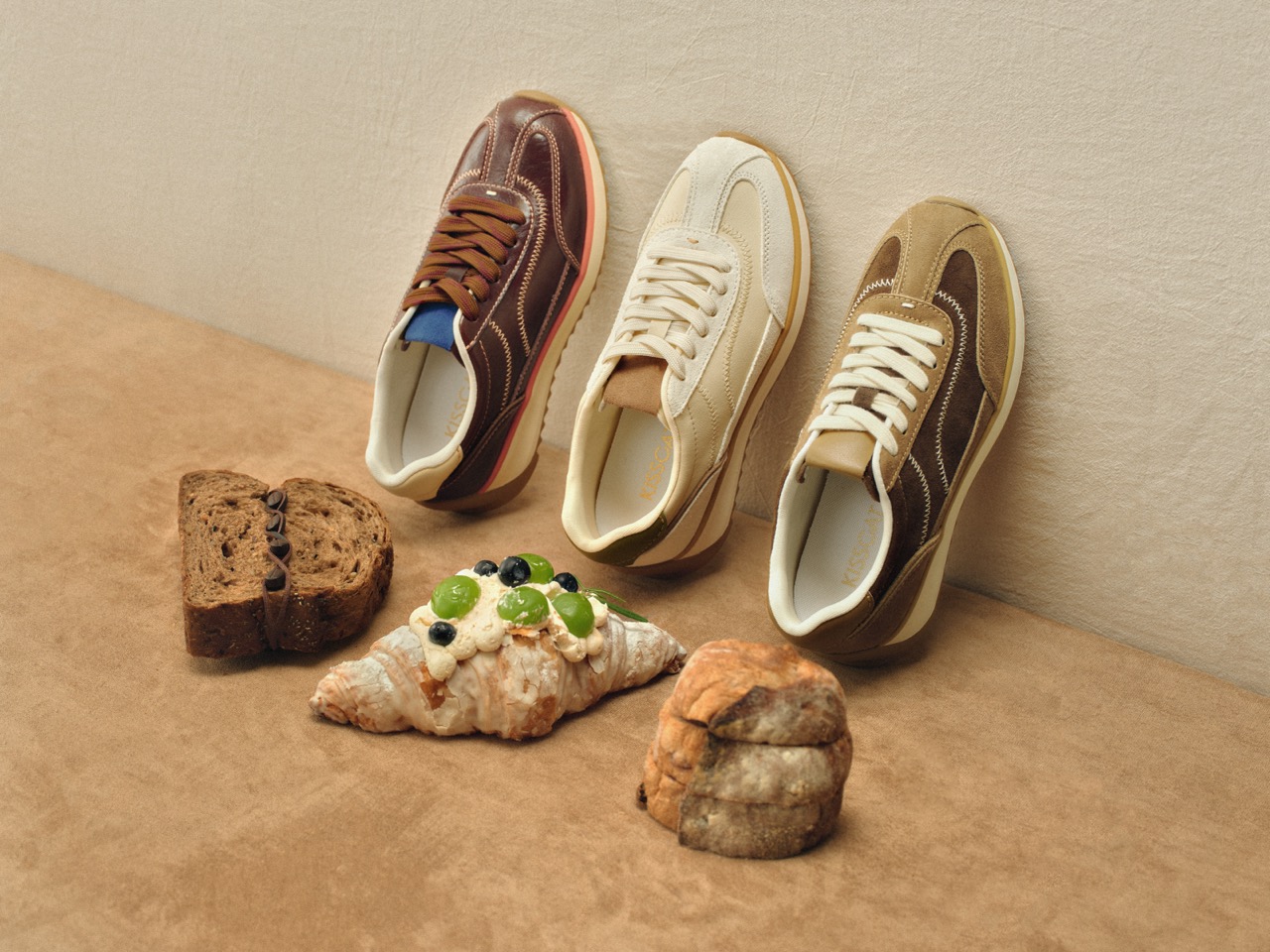
Women actually always have a demand for heeled shoes—flat shoes make many people feel "a bit shorter," with their presence diminished, and prone to a "leaning backward" sensation. Meanwhile, "German army trainer" (GAT) shoes have been one of the fastest-growing footwear categories in recent years. The KISSCAT team combined these two insights and, within the big GAT category, carved out a small niche of "invisible height increase": 5 cm external height increase, 3 cm internal, with no forward-pitching sensation when worn—as if walking on flat ground.

Precise insights plus solid product strength quickly propelled "Toffee" into the top ten in Tmall's GAT shoe category sales, and it was the only thick-soled GAT shoe on the list. The KISSCAT team used this to validate its merchandise planning approach and continued to apply it to more shoe styles, creating the brand's "long-leg shoe" family and gradually forming a unique "hit product methodology."
Brand Momentum Continues to Rise, Store Renewal Comes at the Right Time
KISSCAT's casual sneakers entered the market in 2024 and by 2026 accounted for nearly 50% of sales, with a growth rate of nearly 70%, becoming the "spearhead category" driving brand growth. At the same time, the improved and upgraded fashion formal shoes also received positive market feedback—many consumers exclaimed: "Fashion shoes can actually be this comfortable!"
With product strength established, upgrading brand communication became imperative. Wu Jing believes: "The next stage of competition will surely be aesthetic competition."
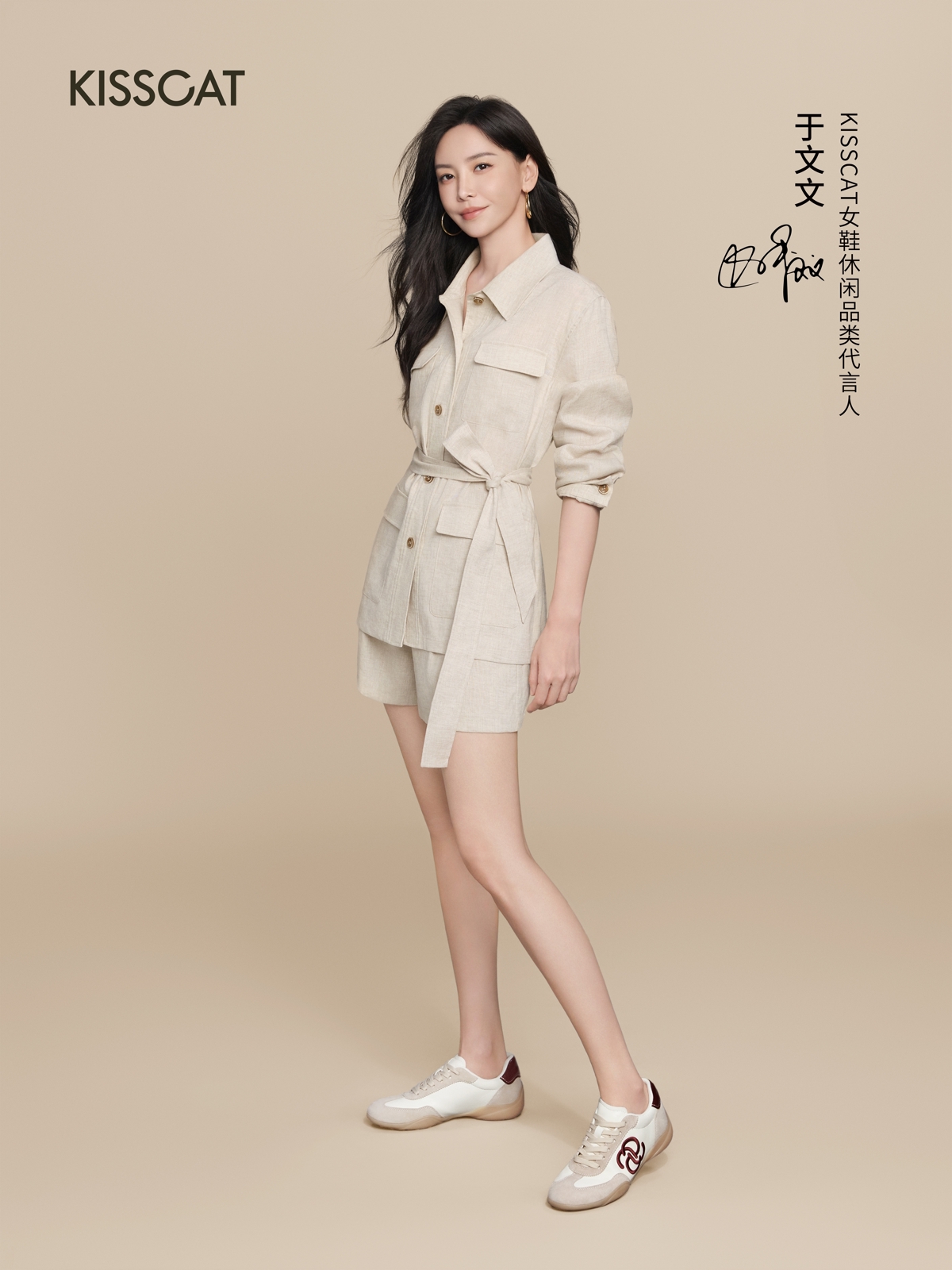
Since last year, KISSCAT has launched a multi-dimensional market communication upgrade: product content quality aligned with a more premium brand tone; the brand launched the "100 Light-Up Plan," collaborating with designers and well-known IPs on multiple co-branded projects, using "cats" as a medium to expand brand boundaries through various artistic approaches; in August 2026, KISSCAT announced that musician Yu Wenwen became the brand ambassador for its women's casual footwear category... These innovative practices have made many consumers truly feel that KISSCAT's brand momentum is gradually rising.
KISSCAT's upgrades and reforms on the product and communication fronts directly boosted channel sales and operational efficiency. Regarding the composition of terminal channels, Wu Jing shared that KISSCAT's e-commerce accounts for 40% and physical stores for 60%—offline stores have always been KISSCAT's foundation.
Currently, KISSCAT has more than 200 directly operated stores and over 100 franchise stores nationwide. In the reform over the past two years, stores have also been optimized simultaneously: on one hand, the brand proactively closed some stores with high foot traffic but whose locations did not match the brand positioning; on the other hand, improved store efficiency made the team more confident that store upgrading is timely.
In 2025, KISSCAT's new-generation "Urban Oasis" concept store officially debuted. The store integrates plant communities and art sculptures into the offline experience, creating a tranquil and relaxed atmosphere. This concept echoes the soft, relaxed imagery of the "cat" in the brand name, allowing customers to feel a breath of nature in the city.

Above: KISSCAT's new-generation "Oasis" store at Zhengzhou Zhengdong MixC
Currently, multiple KISSCAT stores in Zhengzhou, Changsha, Shenzhen, and Shanghai have been upgraded to "Urban Oasis" concept stores. The results after store upgrades were immediate: new-generation stores saw new customer growth exceeding 50%, store efficiency increased by 40% compared to traditional stores,the average age of users is nearly 10 years younger than at traditional stores, the proportion of people under 40 increased by 7 percentage points, and the 30-40 age group has become the absolute main user base of the new-generation stores.

Today, many traditional women's footwear brands have gradually withdrawn from offline commercial complexes, while KISSCAT, after its brand reform, continues to increase offline investment and has established good cooperative relationships with many leading commercial complexes. Why can KISSCAT rise against the trend? Wu Jing analyzed it this way:
"Apparel is a core category in shopping malls. As a complementary category to apparel, women's footwear is a popular option for tenant recruitment. In recent years, the decline in women's footwear brands' appeal to commercial complexes is rooted in severe brand homogenization and a lack of distinctive features.
Currently, the competitive environment for offline physical retail is also fierce, and tenant recruitment standards continue to rise. If one is looking for a women's footwear brand with a solid 'foundation' and systematic brand operation capabilities, independent design, stable high-quality output, high quality-price ratio, and a balance of comfort and fashion, KISSCAT is almost the only choice. In the future, we also hope to join hands with more like-minded partners to continue promoting the transformation and upgrading of offline stores."

Above: KISSCAT's new-generation "Oasis" store at Wuhan MixC
"The Great Wall Still Needs to Be Built"
Looking to the future, Wu Jing admitted that "the Great Wall still needs to be built." The brand's performance over the past two years has given the team more confidence to move forward according to the established plan:
At the product level, the "invisible height increase" casual sneakers have become the brand's breakout "spearhead category," validating the team's judgment and execution in product innovation. The next step will be to continue enhancing product fashionability and quality taste, and integrating with more styles.
At the communication level, KISSCAT will continue to provide users with higher-quality aesthetic experiences and emotional connections, enabling the brand to output more content with warmth, beauty, and creativity.
At the retail innovation level, physical stores, as the core frontline for directly facing consumers and comprehensively conveying brand philosophy, will continue to deliver refreshing experiences. In the second half of 2026, KISSCAT's all-new generation spatial image will debut. By the end of 2027, KISSCAT will continue to add new-image stores, consolidate its advantage in core business districts of first-tier cities, strengthen its presence in second-tier cities, and selectively penetrate third-tier cities with strong consumption power.
Currently, KISSCAT's brand upgrade has begun to show results, and what truly underpins this reform is undoubtedly Tianchuang Group's nearly 30 years of supply chain foundation and the team's consistent craftsmanship spirit.
Wu Jing said: "Many people are used to understanding women's footwear brands through the 'smiling curve'—product at one end, brand at the other, with the supply chain placed at the very bottom of the curve. But for us, what supports KISSCAT is a 'rainbow skylight,' with the middle firmly held up by an intelligent manufacturing supply chain. Even if a certain category falls out of fashion in the future, or AI becomes more deeply involved, the team's cognitive foundation and the company's manufacturing capabilities will still be able to continuously absorb new technologies and new trends—this is the most valuable underlying support that time has given the company, and it is a true corporate asset."
| Image source: Provided by the brand
| Editor: LuxeCO