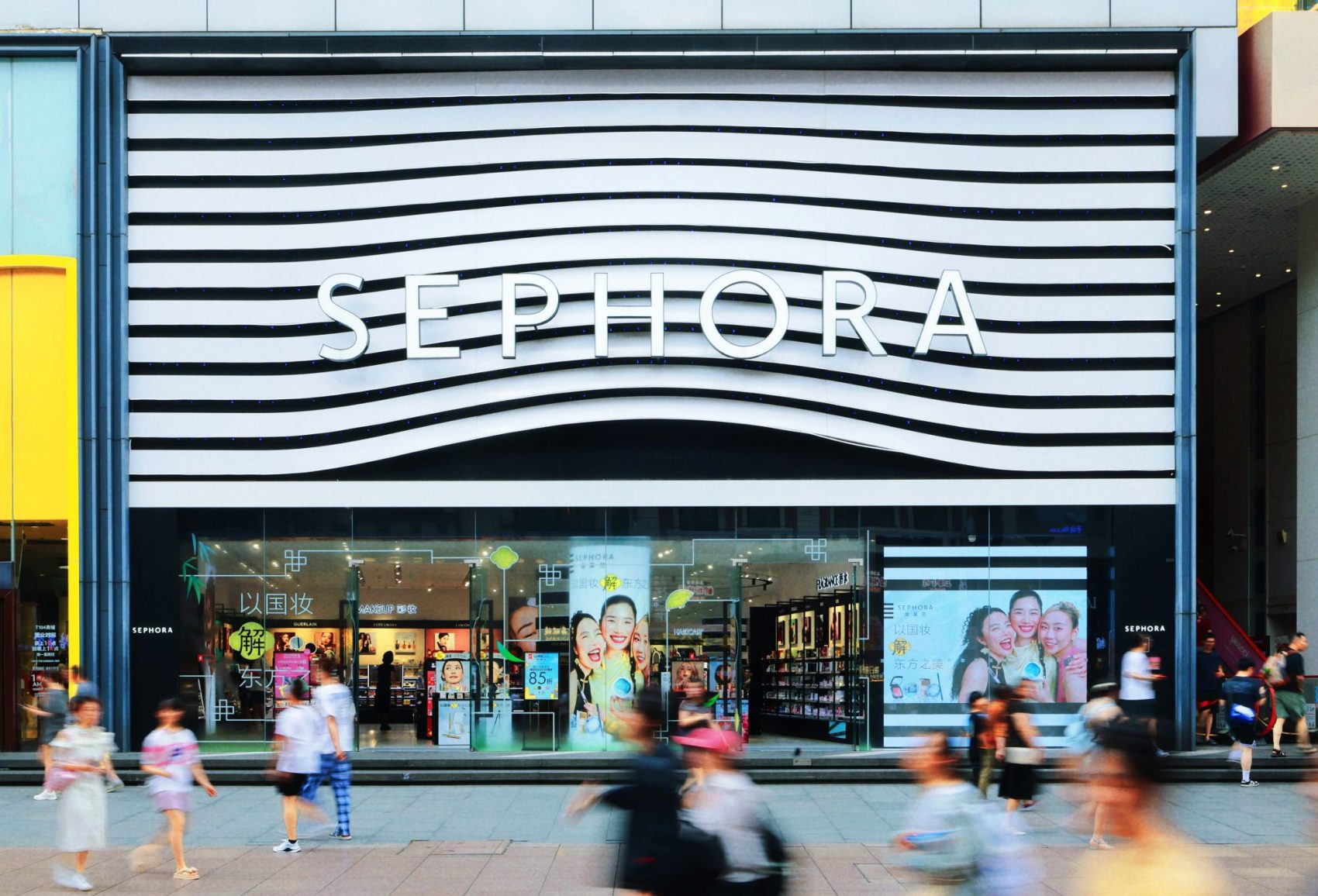
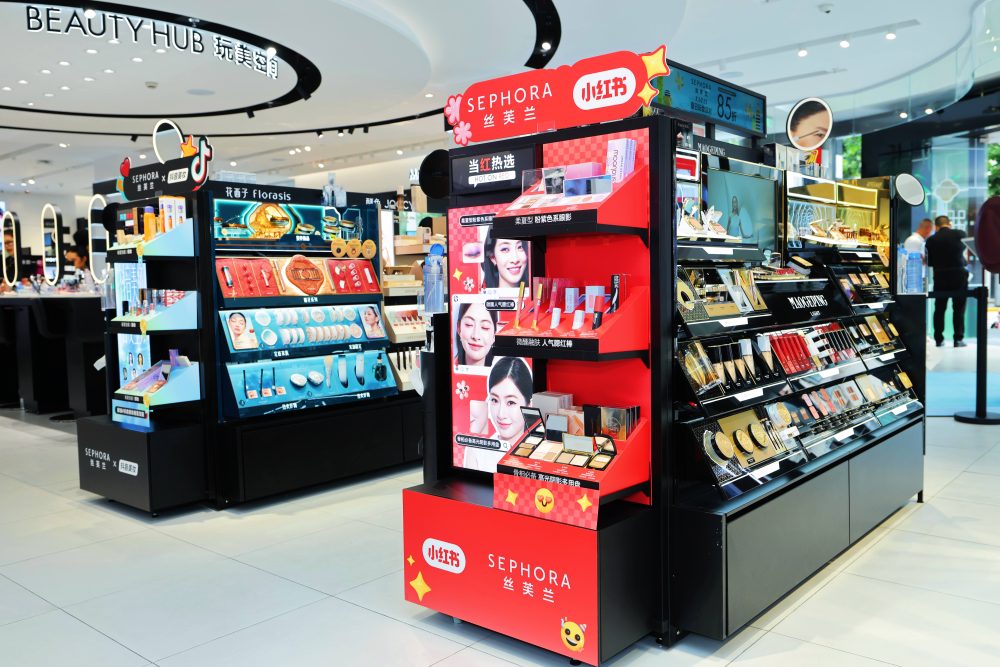
Recently, the Sephora Shanghai Xiangyang flagship store completed its renovation and upgrade, with Sephora Global President and CEO Guillaume Motte and Greater China General Manager Ding Xia both in attendance. Stepping into the store, the first thing that catches the eye is the trend curation area, which is currently showcasing the latest trend collections from Chinese beauty brands such as MAOGEPING Light & Shadow, JOOCYEE, and Red Chamber.
This also reflects Sephora's further strategic focus on and deepening commitment to the Chinese market. As a leading global prestige beauty retailer, Sephora's moves have always been an industry bellwether. Over the past three years, its global sales revenue has grown by nearly US$5 billion, achieving positive growth for 22 consecutive quarters. In the Chinese market, offline store foot traffic has maintained double-digit growth for 21 consecutive months since the fourth quarter of 2024, driving a steady recovery in the business. Whether the Chinese market can further become an important engine for Sephora's global growth and innovation practices has become a focus of industry attention.
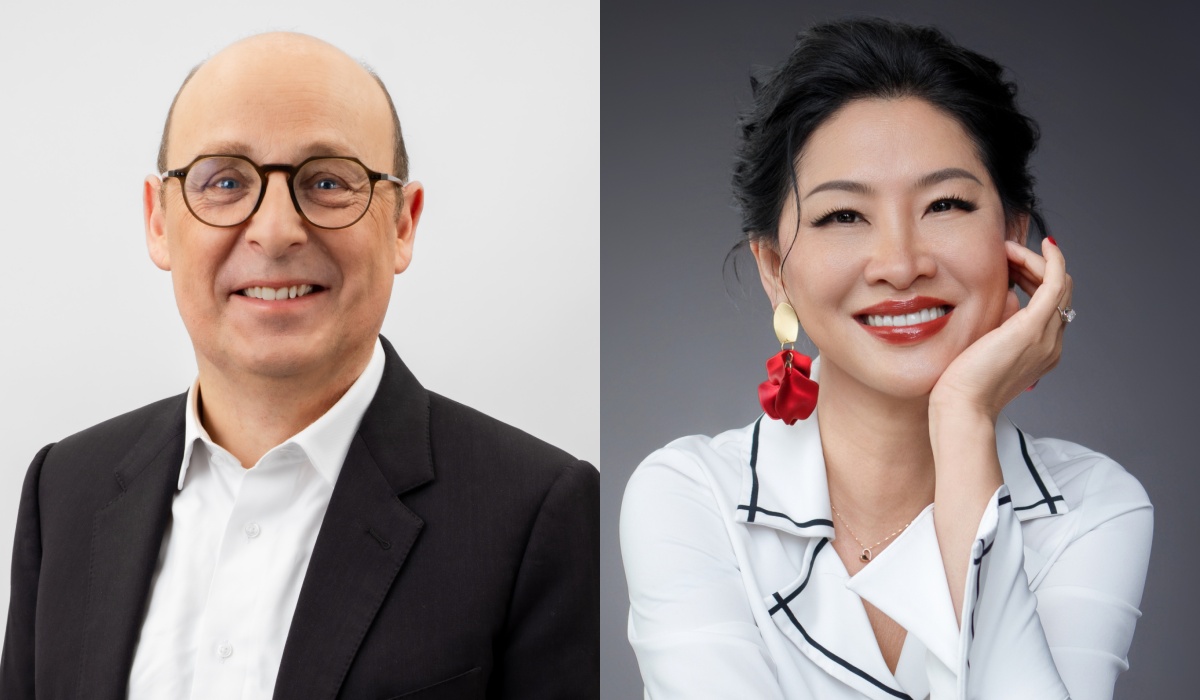
Sephora Global President and CEO Guillaume Motte and Greater China General Manager Ding Xia
The Next "China" Is Still China
"The next China is still China." Guillaume Motte gave a clear answer when asked who will become the next China in the consumer market. Recently, Sephora China's offline store foot traffic has achieved sustained growth, and at a time when physical retail is under widespread pressure, such foot traffic performance is sending a definite positive signal.
On the first-quarter fiscal 2026 earnings call of Sephora's parent company, LVMH, Chief Financial Officer Cécile Cabanis confirmed that Sephora's performance in Asia, particularly in the Chinese market, has already been flat year on year. This means the adjustment period that lasted nearly two years has essentially come to an end. As market performance gradually stabilizes, the role of the Chinese market in Sephora's global strategy is once again drawing attention.
In Guillaume Motte's view, the strategic weight of the Chinese market is reflected in three dimensions: in terms of scale, as the world's second-largest beauty market after the United States, it forms a solid growth foundation for Sephora; in terms of innovation, the emerging local brands and product iterations in China not only precisely respond to local consumer needs but also inject diverse inspiration and cultural perspectives into the global product selection system; in terms of technology, China's leading practices in building digital ecosystems and applying AI provide valuable reference paradigms for Sephora's global operations. A typical example is Sephora's "online beauty advisor" — relying on WeCom, more than 3,000 beauty advisors at Sephora China have established one-on-one direct connections with over 5 million active members. Guillaume Motte said this operating model born from the digital ecosystem has the potential to be exported to markets such as Europe and the United States.
This keen adaptation to the local ecosystem even extends to the highest levels of management. From proactively entering livestreams to interact directly with consumers to going deep into the front lines to understand social trends, the Sephora China team is continuously improving its market responsiveness by strengthening localized practices. This top-down exploration conveys Sephora's sincerity in shifting from one-way brand output to two-way authentic connection.
This is a critical moment for the development of China's beauty retail industry. Data from the National Bureau of Statistics shows that in the first half of 2026, China's cosmetics retail grew 4.9% year on year, outperforming the overall 1.4% growth of total retail sales of consumer goods, once again validating the resilience of the beauty sector. But beneath the growth figures, the industry's structural adjustment is equally profound — traditional offline channels such as specialty stores and department stores continue to reshuffle, foot traffic is concentrating in shopping malls, consumer decision-making paths are being restructured by social media, and local brands are rising rapidly. Every variable is forcing retailers to rethink their value positioning.
From "Brand Aggregation" to "Curated Value"
If foot traffic growth is the result, then the adjustment of product selection strategy is one of the most important driving forces behind it. This emphasis on local innovation is first and most directly reflected in the restructuring of its product selection strategy.
At present, Sephora China has introduced 26 Chinese beauty brands, covering multiple segments including color cosmetics, fragrance, and skincare, with a more diverse price range. This move has sparked discussion in the industry — does a beauty retailer's absorption of local brands mean a downward shift in positioning?
Ding Xia's response directly addressed the core of the question: "Sephora's success in more than 30 countries around the world has never been about gathering luxury brands, but about curating the most representative local brands from a global perspective and engaging in long-term brand co-creation with them."
This selection logic is not unique to China. Guillaume Motte cited the Korean market as an example — South Korea has 30,000 beauty brands, and Sephora chose to partner with local retailer Olive Young precisely because the latter is best at selecting the highest-quality product mix from a vast number of brands. The introduction of Chinese local brands follows the same methodology.
As for specific screening criteria, Ding Xia listed four dimensions: first, whether the brand is deeply loved by consumers and has a sustainable customer base rather than being a short-term hit; second, whether the brand has strong iteration and R&D capabilities and can continuously launch new products addressing consumer pain points; third, whether it has a strict pursuit of product quality; and fourth, and most critically — whether the founder is running a business or building a brand. "I have met every founder of every Chinese beauty brand," Ding Xia said. "We need to be confident about a brand's long-term viability before we can achieve co-creation."
"Co-creation" is a key word in Sephora's product selection system. There is an internal saying at the company called the "in the kitchen approach" — Sephora feeds the consumer data and pain-point insights it has gathered back to brands, helping them develop products that truly solve problems. Market feedback has validated this logic: most domestic brands exceed sales expectations about 6 months after launching on Sephora. An even more interesting phenomenon is that consumers will buy a Dior lipstick and pick up a Sanzitang eyebrow pencil at the same time. This mixed shopping cart of "big brands + domestic brands" proves that consumers no longer judge solely by price tier, but combine products according to their needs.
In Guillaume Motte's view, "prestige" and "mass" are essentially a discussion about price, while what Sephora focuses on is the "optimal product mix". "What truly sets Sephora apart is that we can curate and combine among all possibilities to create a product matrix covering different brands, different categories, and meeting various consumer needs." This curation capability itself has become a powerful endorsement of trust in an era of information overload.
Where Does the "Irreplaceability" of Offline Retail Lie
In China, the world's most active e-commerce market, the value of offline retail is often questioned. But Sephora has given its own answer with continuously growing foot traffic.
"If a retailer has no foot traffic, it has nothing." This remark from Ding Xia precisely captures the core of retail operations. To "invite people in," Sephora has done extensive work, continuously restructuring the relationship between stores, content, and community so that consumers shift from simply buying products to immersing themselves in the beauty experience.
The renovated Shanghai Xiangyang flagship store is a concentrated embodiment of this philosophy.
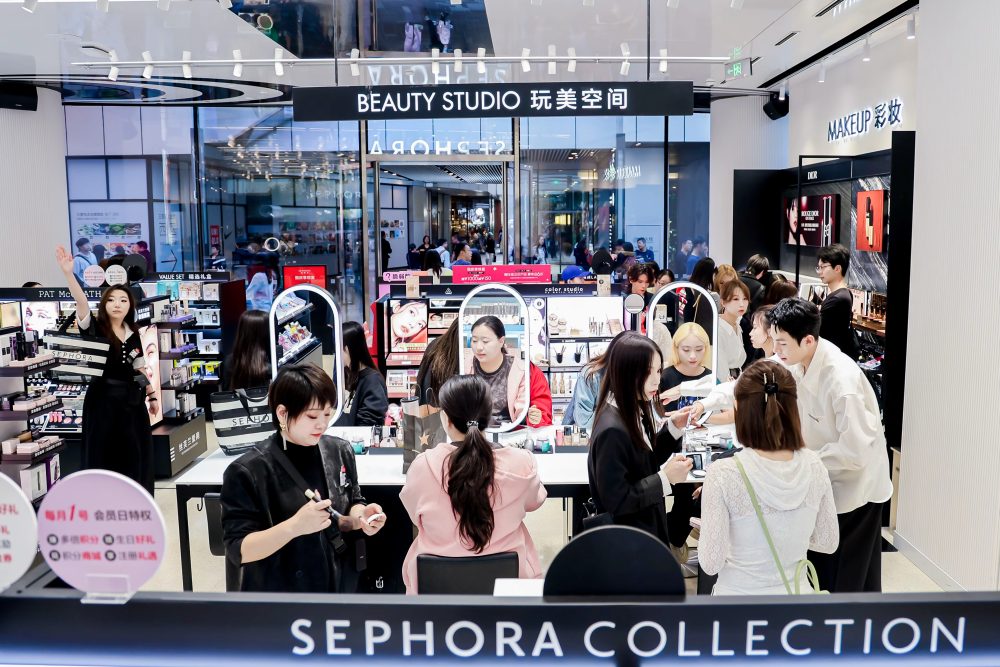
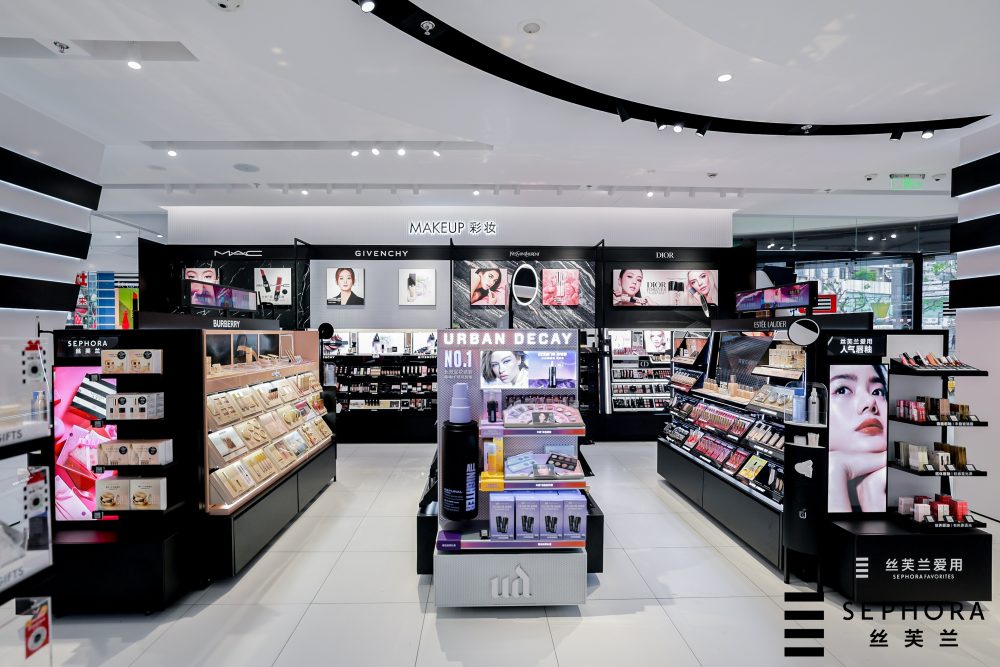
The store breaks away from conventional display logic. Products are no longer entirely divided by brand; instead, professional advisors curate combinations for customers based on current beauty trends, such as "best-seller bag sets," reducing the cost of trial and error for consumers. Through a diverse product matrix, free try-on, professional beauty advisor services, trend curation, and member interactions, the store is turned into a "beauty playground." The second floor presents consumers with Sephora's "Play Beauty Lane" urban slow-flash experience space, deeply integrated with Shanghai's local culture, with content co-created with brands and regularly updated to create reasons for frequent return visits.
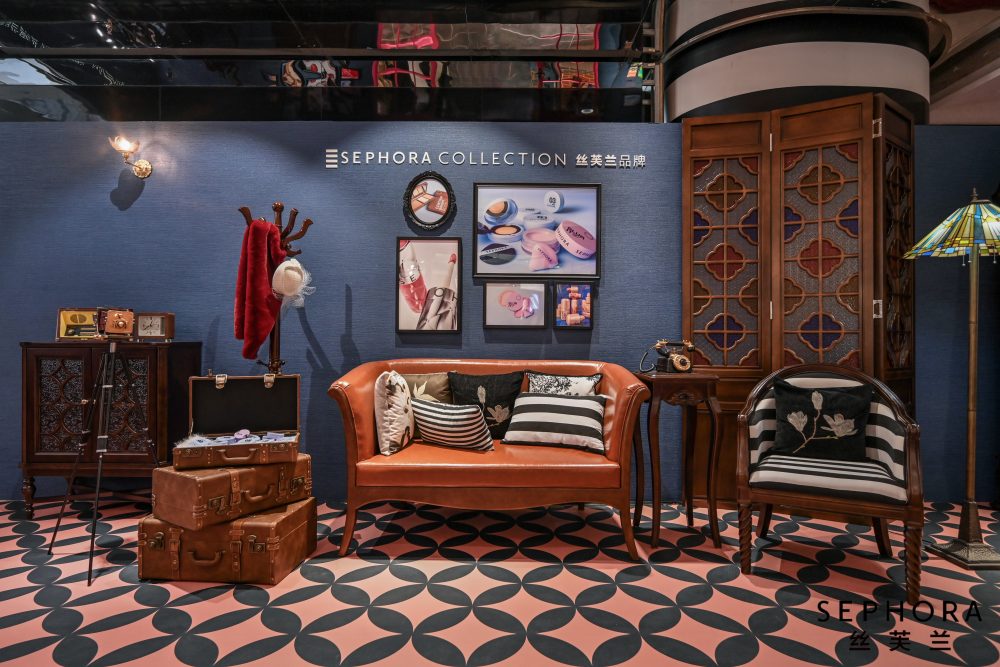
This "localized" scene creation not only increases the return-visit rate of local customers but has unexpectedly tapped into the tourism economy. Located in the core commercial district of Zhangyuan, one of the newly popular tourist destinations, the Xiangyang flagship store now sees overseas customers account for 35% of foot traffic after its renovation. Chinese beauty brands such as Florasis have become the most frequently purchased souvenirs among foreign tourists due to their packaging and designs with strong Chinese aesthetic characteristics. This echoes the "gift attribute" of Sephora stores worldwide — at Sephora on the Champs-Élysées, tourists look for beauty products with French characteristics; in Shanghai, they look for choices that represent Chinese beauty.
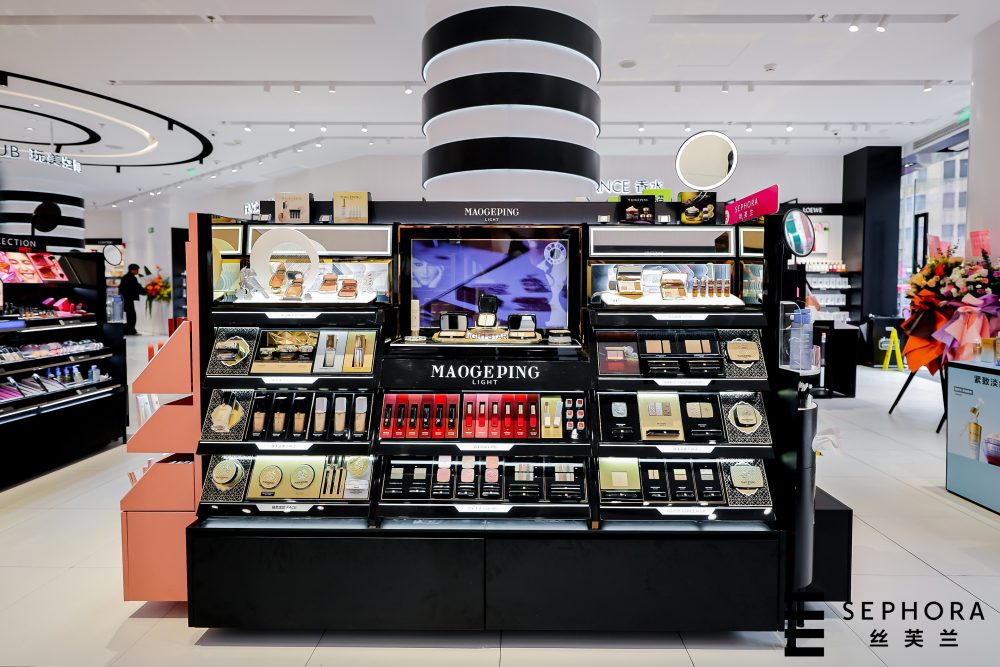
In addition to the experience upgrade at the flagship store, Sephora has also implemented refined store classification operations. Ding Xia divided the more than 320 stores nationwide into four categories: flagship, campus, community, and CBD, configuring differentiated brand matrices and service resources for different commercial districts. For example, campus stores focus on niche, high-value-for-money brands, while CBD stores strengthen big-brand services. This "thousand stores, a thousand faces" strategy ensures that Sephora, while covering 104 cities across tiers one to four, can still maintain keen responsiveness to local consumer needs.
Connection and Community: From Private-Domain Interaction to Gala Resonance
The closed loop of offline experience cannot be separated from digitalization and deep human connection. Sephora has abandoned the pure traffic-investment approach and built an "online beauty advisor" system relying on the WeChat ecosystem. Beauty advisors establish one-on-one connections with Sephora active members through WeCom, providing precise product recommendations and services based on user profiles. Guillaume Motte stated directly that this refined operating capability based on private-domain data is a unique advantage of the Chinese market and has the potential to be exported to other global markets such as the United States and France.
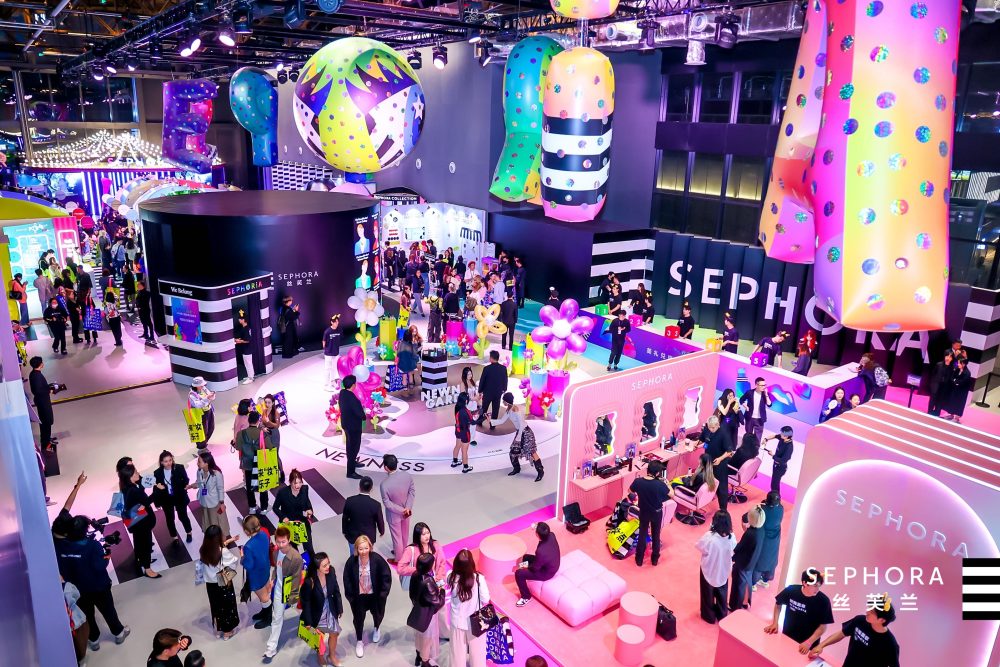
However, connection does not only happen between phone screens; it also erupts in real offline gatherings. SEPHORiA is the annual flashpoint of this community energy. It has gone beyond an ordinary beauty event and evolved into a kind of "cultural ritual" for Sephora's core user group. In this closed space dominated by Sephora, nearly 5,000 participants are no longer scattered consumers but community members who share a common aesthetic language. They come here not only to learn about new products but also to confirm their sense of identity and belonging — this strong connection formed on the basis of shared passion is difficult for cold algorithm recommendations to replicate. As Guillaume Motte said, SEPHORiA proves that when a retail brand can provide sufficiently high emotional value and social currency, consumers are willing to shift from "bystanders" to "participants," and even pay for tickets to this unique brand experience.
Under this model, Sephora's membership system plays a dual role: first, achieving high-frequency retention through everyday multi-brand points sharing and a "rewarding and fun" mechanism; second, activating the community through large-scale galas such as SEPHORiA, transforming scattered members into a close community with shared aesthetic tastes. Guillaume Motte emphasized: "If the membership system were merely a transactional mechanism, Sephora could not have more than 80 million members worldwide. What we value is the emotional connection built around a passion for beauty." From daily one-on-one BA consultations to the collective carnival of the annual gala, Sephora is building a three-dimensional community network that has both breadth and depth.
Conclusion
From the localized curation of product selection strategy to the scenographic reconstruction of spatial experience, and then to the refined connection of retail operations, this round of adjustment by Sephora in the Chinese market is essentially answering one question: when online shopping is convenient enough, why do consumers still walk into physical stores?
The answer lies in the four keywords "curation, co-creation, experience, connection." Curation provides a trust endorsement, experience leverages the natural advantages of offline, and connection establishes an emotional bond that goes beyond transactions.
For China's beauty retail industry, Sephora's practice provides a valuable observational sample: if offline retail stops at being "boring," it has no future; only by returning to the retail essence of "creating irreplaceable value" will growth follow naturally.
For Sephora globally, the significance of the Chinese market has long surpassed sales figures. This is the forefront of digital technology, the benchmark for retail experience upgrades, and the source of inspiration for global beauty innovation. When Guillaume Motte says "the next China is still China," he refers not only to market size but also to the experience, methods, and confidence that the Chinese market can export to the world. In this sense, Sephora's second half in China has only just begun.
丨Image source: Sephora China
丨Responsible editor: Elisa