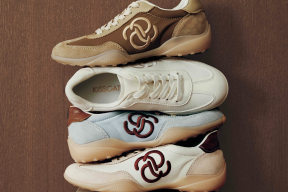
In June 2026, Japanese sportswear group ASICS announced that its brand Onitsuka Tiger will be spun off as an independent company, OT GROUP, in 2027, with full decision-making autonomy over planning, channels and marketing. This may be the most important identity shift for the brand since Onitsuka Tiger was founded in 1949.
At the time of its "independence," Onitsuka Tiger is in a very strong growth phase: sales in fiscal 2025 and the first half of fiscal 2026 grew 43% and 35.9% year-on-year respectively, with a category profit margin of nearly 40%.
For Onitsuka Tiger, the real question after independence is not just how to continue growing, but also to prove that it has become a unique brand that transcends the traditional sportswear category.
"The biggest change is first and foremost the company name," Ken Kanome, General Manager of Onitsuka Tiger Greater China, said in an exclusive interview with LuxeCO. After independence, the brand can speak to the outside world as an independent "Onitsuka Tiger" company, "consumers' perception of the brand will be more intuitive, and communication more effective."
In his view, the direction for Onitsuka Tiger in the Chinese market is also very clear: "further strengthen premiumization, especially premiumization in fashion." Accordingly, the brand will continue to move into higher-tier commercial locations and expand the development of fashion products.
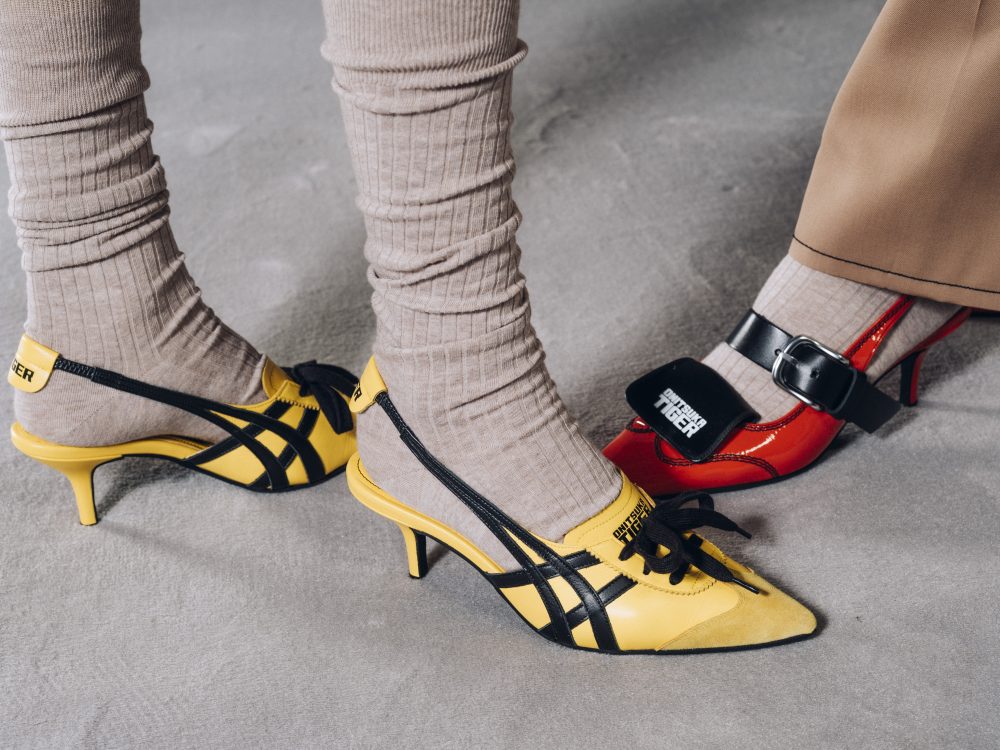
Downplaying Athletic Attributes: Onitsuka Tiger's "Fashion" Goes Beyond "Retro"
In 1949, Kihachiro Onitsuka founded a shoe company in Kobe and named the brand "Tiger." In 1966, Onitsuka Tiger's legendary iconic Tiger Stripes were born. In 1977, Onitsuka Tiger merged with other sports brands to form ASICS, and thereafter operated as a brand under the group for a long time. Over years of development, Onitsuka Tiger gradually developed a brand DNA distinct from ASICS: ASICS focuses more on professional sports, while Onitsuka Tiger, after being relaunched as a fashion brand in 2002, gradually shifted its focus from professional sports to fashion and lifestyle.
MEXICO 66 is one of the most important product assets of this shift. In 2002, Onitsuka Tiger launched the iconic shoe model MEXICO 66, reinterpreting a historical brand shoe and gradually gaining attention in the European fashion market. In 2003, the TAI-CHI shoes appearing in the film Kill Bill further strengthened Onitsuka Tiger's recognition in popular culture. In recent years, retro running shoes have become popular again, with consumers shifting from thick, high-cushion shoes to simpler, thin-soled shoes, which has also brought new growth momentum to Onitsuka Tiger.

But the brand clearly does not want consumers to understand it only as "retro sneakers."
In the past few years, Onitsuka Tiger has continued to appear at Milan Fashion Week, launched high-end product lines such as NIPPON MADE (made in Japan) and ITALIAN MADE (made in Italy), and collaborated with brands such as Versace and Mikimoto, gradually expanding its brand equity from sneakers to fashion and lifestyle.
"Downplaying athletic attributes is ultimately something consumers gradually feel through experience, rather than something we unilaterally declare." Kanome said.
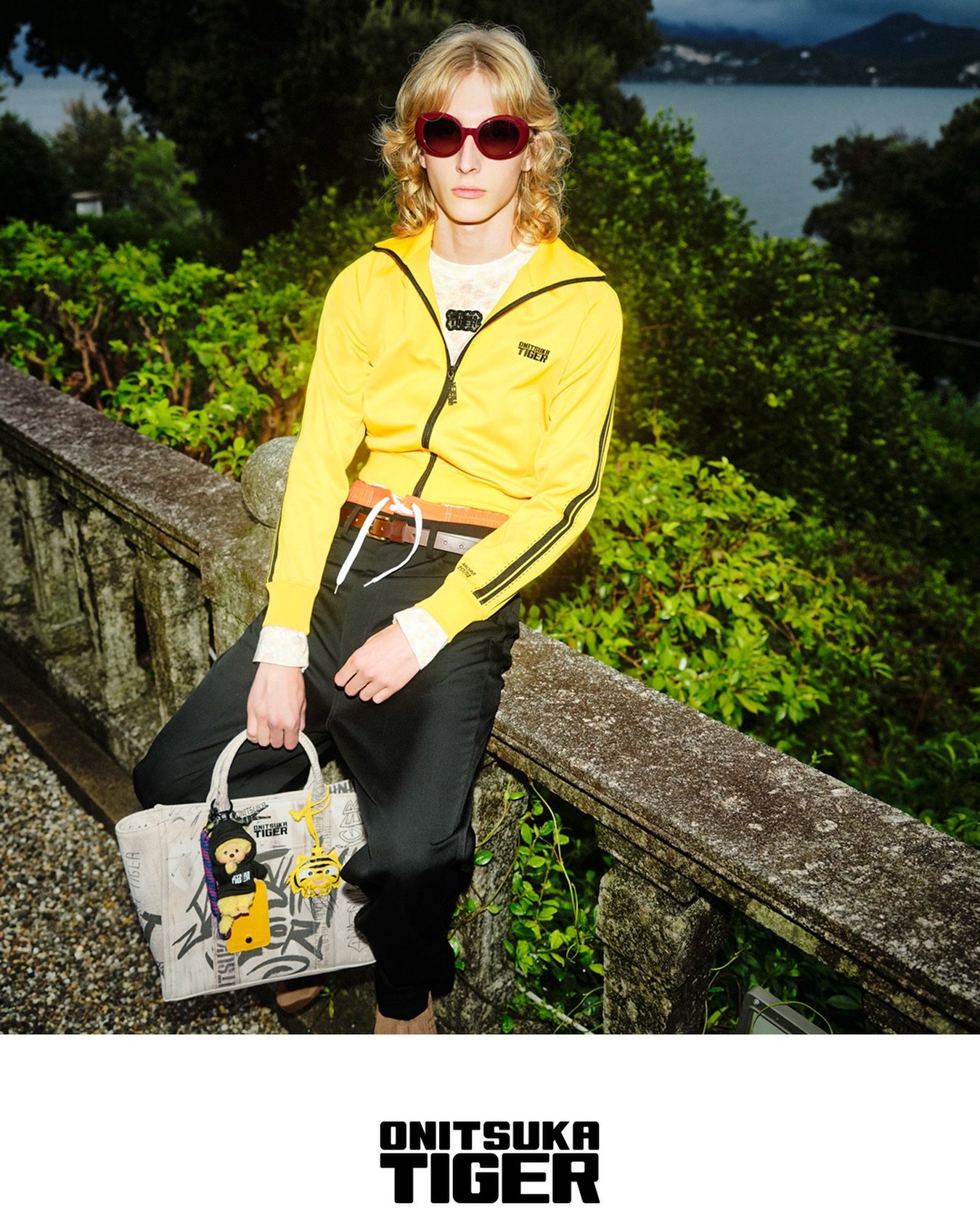
Onitsuka Tiger Spring/Summer 2026 runway looks
In his view, Onitsuka Tiger has not severed its connection to its athletic DNA: "We can still use ASICS group resources." For example, the group's sports science laboratory ISS will still participate in the development and testing of some Onitsuka Tiger shoe models.
Therefore, what Onitsuka Tiger needs to do is not choose between "sports" and "fashion," but to let the two capabilities coexist: retaining the basic comfort and functionality of footwear while gradually strengthening fashion attributes.
After independence, the talent structure will also change accordingly. Kanome mentioned that in the past, when recruiting within ASICS group, it was easier to attract talent with a sports background, "and then assign them to Onitsuka Tiger according to business needs"; after independence, the brand can attract talent with a fashion background from the recruitment stage, "they are stronger in planning capabilities and marketing experience," which will become Onitsuka Tiger's new competitiveness.
Focusing on the Chinese Market: Where Does the Strong Growth Come From?
At the time of independence, Onitsuka Tiger is in a very strong upward trajectory. The brand's global sales have grown by more than 40% for two consecutive years, and its profit margin leads the ASICS group, the highest among all categories. Among them, Greater China contributed the brand's core sales. According to data disclosed by Onitsuka Tiger to LuxeCO, direct-operated store sales continue to rise, with foot traffic up 50% and sales up 36%. As of August 1, the brand has 65 directly operated stores in Greater China, including outlets.
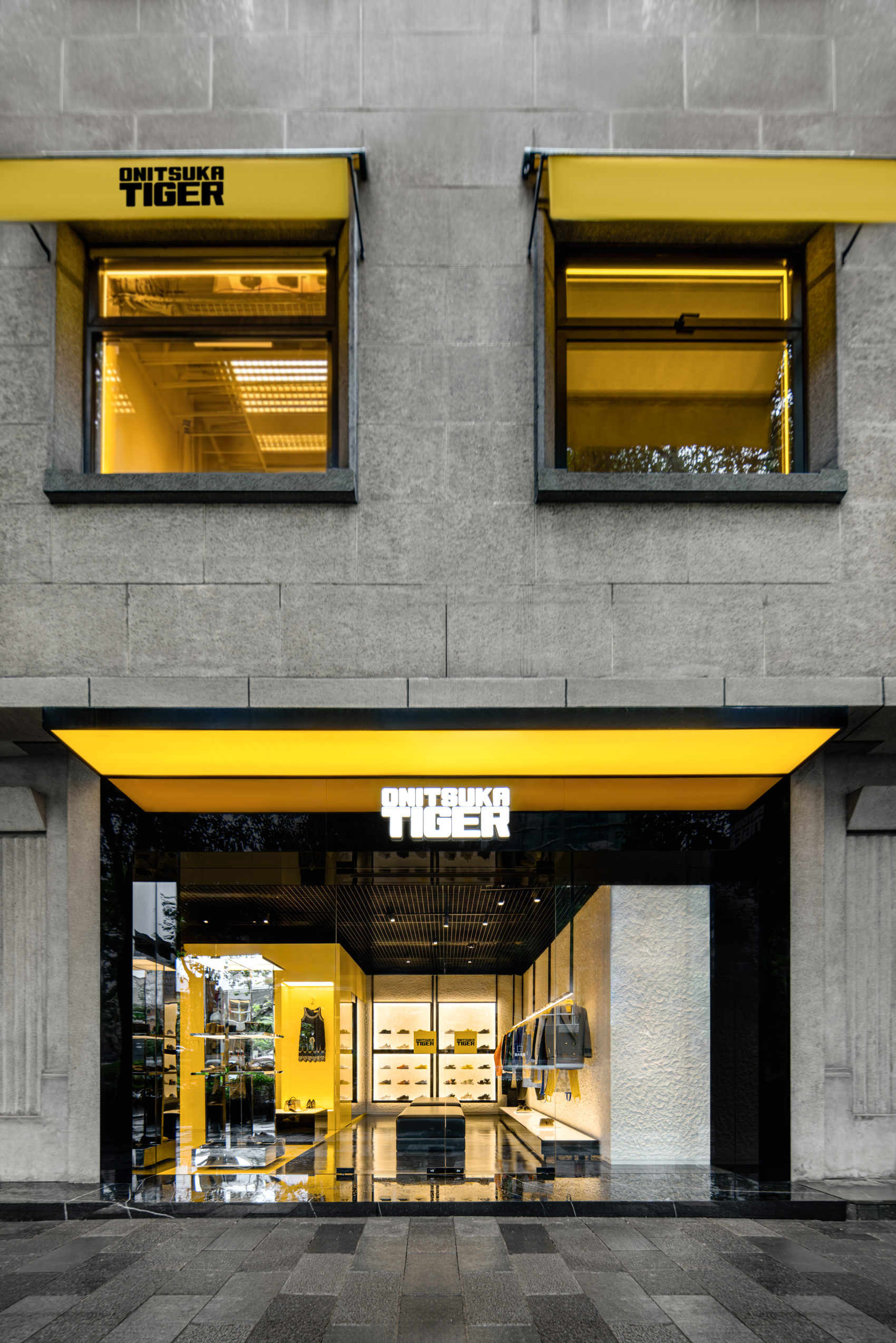
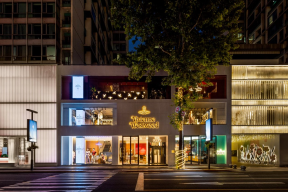
Onitsuka Tiger Shanghai Xintiandi flagship store
The underlying driver of growth in the Chinese market first comes from channel transformation.
In the past, Onitsuka Tiger was more often located in mass shopping malls and sports floors; now, the brand continues to migrate to high-end commercial districts and light-luxury areas. Shanghai iapm is a typical case — Onitsuka Tiger originally opened in the sports area on the fourth floor of the mall, and after three to four years of communication and operation, moved to the first floor; the Beijing China World store moved from a more sports-oriented area to a light-luxury area. These adjustments reflect not only changes in store locations, but also the malls' reassessment of the brand's attributes.
The relationship between online and offline is also being restructured. As the DTC proportion increases, e-commerce is no longer just a sales channel, but part of the entire consumer operation system: online flagship stores handle daily sales and new product reach, while large offline stores handle product experience, brand display and user interaction, together forming a new channel system.
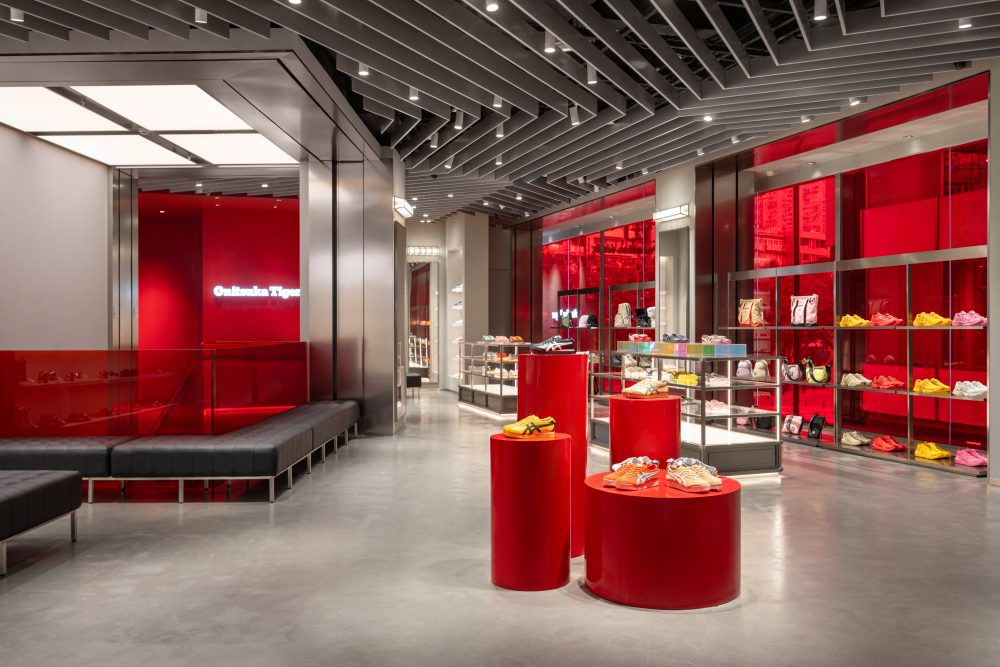
Onitsuka Tiger Chongqing Longfor Times Paradise Walk store
Parallel to channel transformation is the restructuring of store functions.
Currently, Onitsuka Tiger has nearly 200 stores worldwide — after opening its largest global flagship store in Shinjuku, Tokyo, it plans to continue opening stores in markets such as China, Italy and South Korea this year, and plans to return to the US market in February 2027 with a flagship store in Los Angeles. In this global layout, there is still considerable room for store expansion and upgrading in the Chinese market.
"The current situation is that we are halfway there," Kanome said. Shanghai's store layout is relatively mature, while Beijing, Chengdu, Chongqing, Shenzhen, Guangzhou and other regions still have great potential to be tapped.
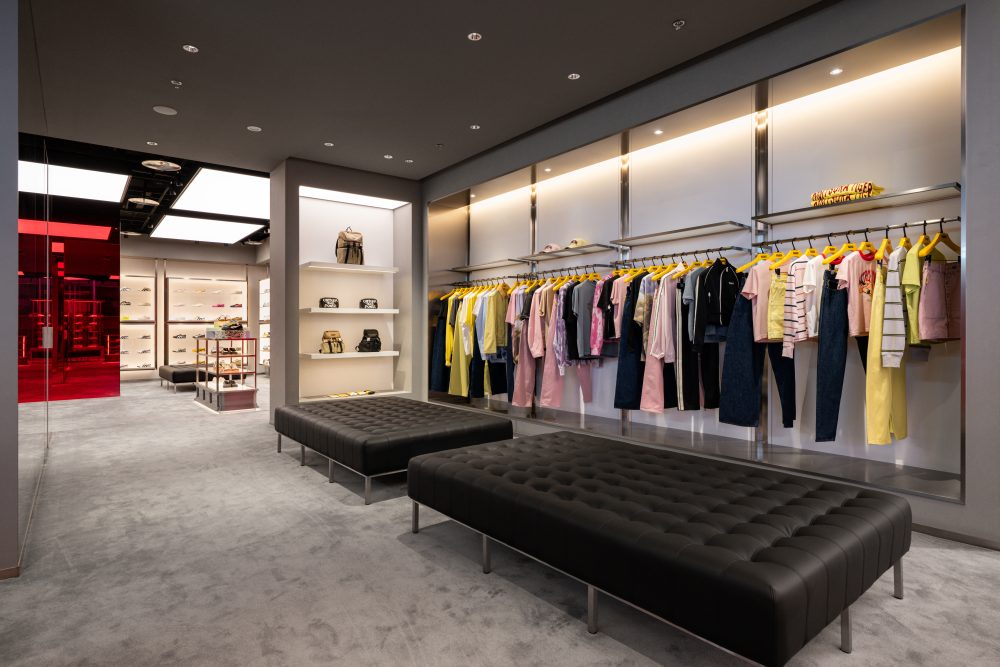
Onitsuka Tiger Beijing Zhongguancun ART PARK Imix Park store
In the future, Onitsuka Tiger hopes to create brand image anchors in key cities by opening large flagship stores of over 1,000 square meters, "creating an unforgettable in-store experience for customers."
The "experience" here is not simply about increasing display area, but means that stores are transforming from "sales venues" into spaces closer to lifestyle showrooms. Brand stores represented by the Xintiandi flagship store and the Zhangyuan concept store have begun to take on multiple functions such as new product launches, art displays, limited-edition exhibitions and consumer events.
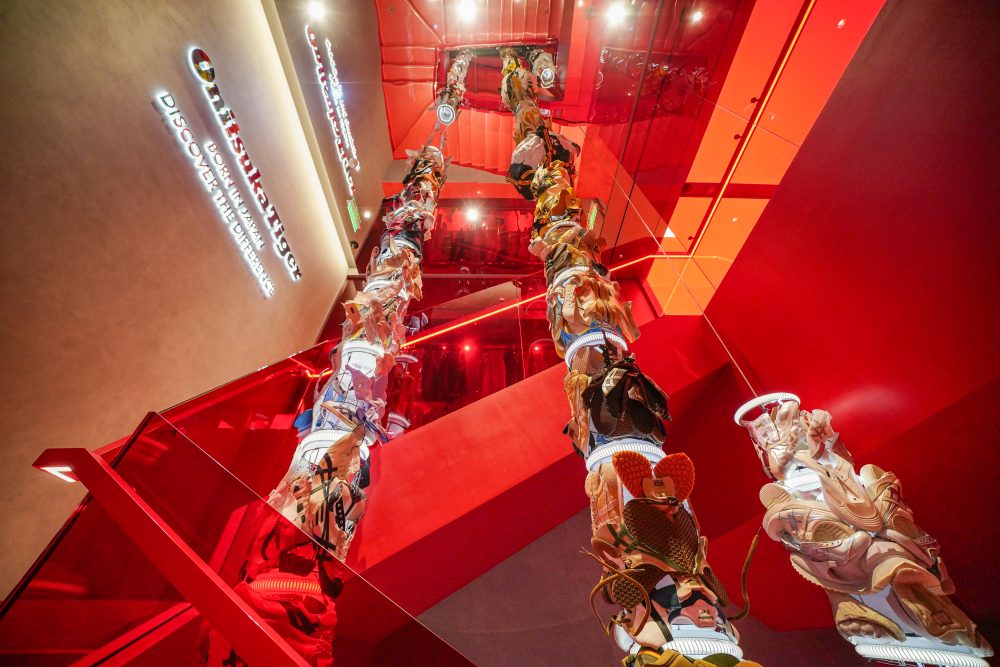
Onitsuka Tiger Chengdu IFS concept store art installation
"Whether we can differentiate ourselves from other brands is the key to whether a brand can survive in the market," Kanome believes that the value of physical stores has not declined due to the development of e-commerce. "China's online sales scale is large, but consumers still want to hold the product, see it, and try it on — these are real experiences."
Three Product Directions, Two-Pronged Approach: Stabilize the Base, Gradually Raise Overall Price Points
Onitsuka Tiger currently divides its overall product portfolio into three directions: Heritage, Contemporary and Formality.
Heritage continues the brand's classic archives, with an average price of about RMB 1,000; shoes emphasizing origin and craftsmanship such as NIPPON MADE and ITALIAN MADE, with NIPPON MADE priced at about RMB 2,000 to 2,500 and ITALIAN MADE at about RMB 3,000 to 3,300. Contemporary corresponds to the fashion collections presented at Milan Fashion Week, priced at about RMB 1,450 to over 8,000; Formality is handled by THE ONITSUKA for formal business footwear, priced at about RMB 3,000 to 4,000.
Kanome summarizes this strategy as a "two-pronged approach": on one hand, stabilize the Heritage base; on the other hand, expand the consumer base and sales share through Contemporary and Formality, "gradually raising the overall unit price."
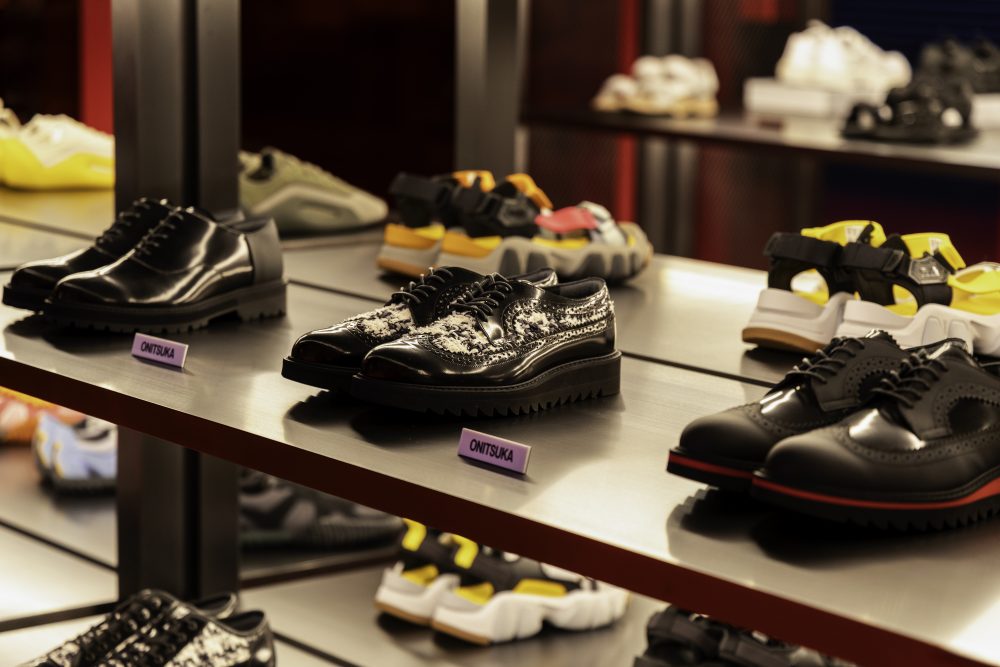
One very important change is "de-logoization."
Kanome said that some employees and consumers prefer understated products and want more restraint in styling. Contemporary is exactly the product direction developed for this demand, reducing the presence of overt logos and strengthening the product's adaptability in everyday wear.
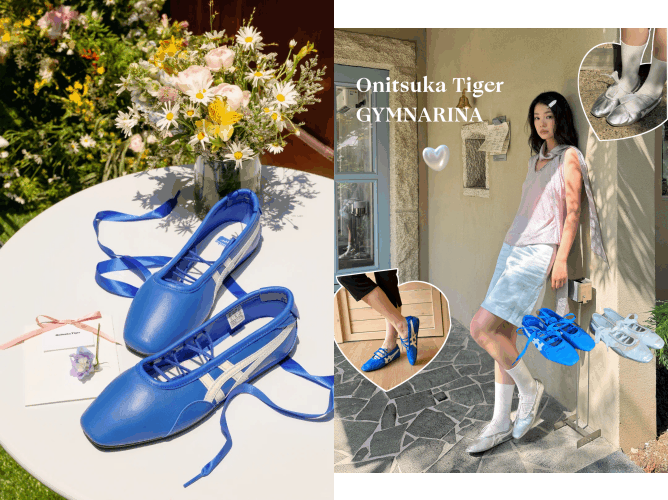
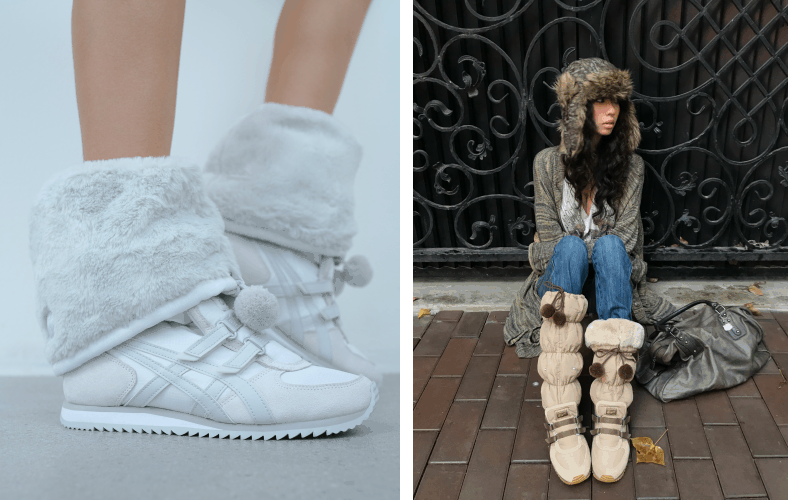
This also aligns with changes among young Chinese consumers — to meet diverse consumer needs, the brand launches more than 360 new shoe styles each year. For example, in recent years it launched the GYMNARINA and MEXICO 66 TGRS ballet shoes in response to the Balletcore trend; the WINTER HEAVEN snow boots expand autumn/winter styling scenarios.
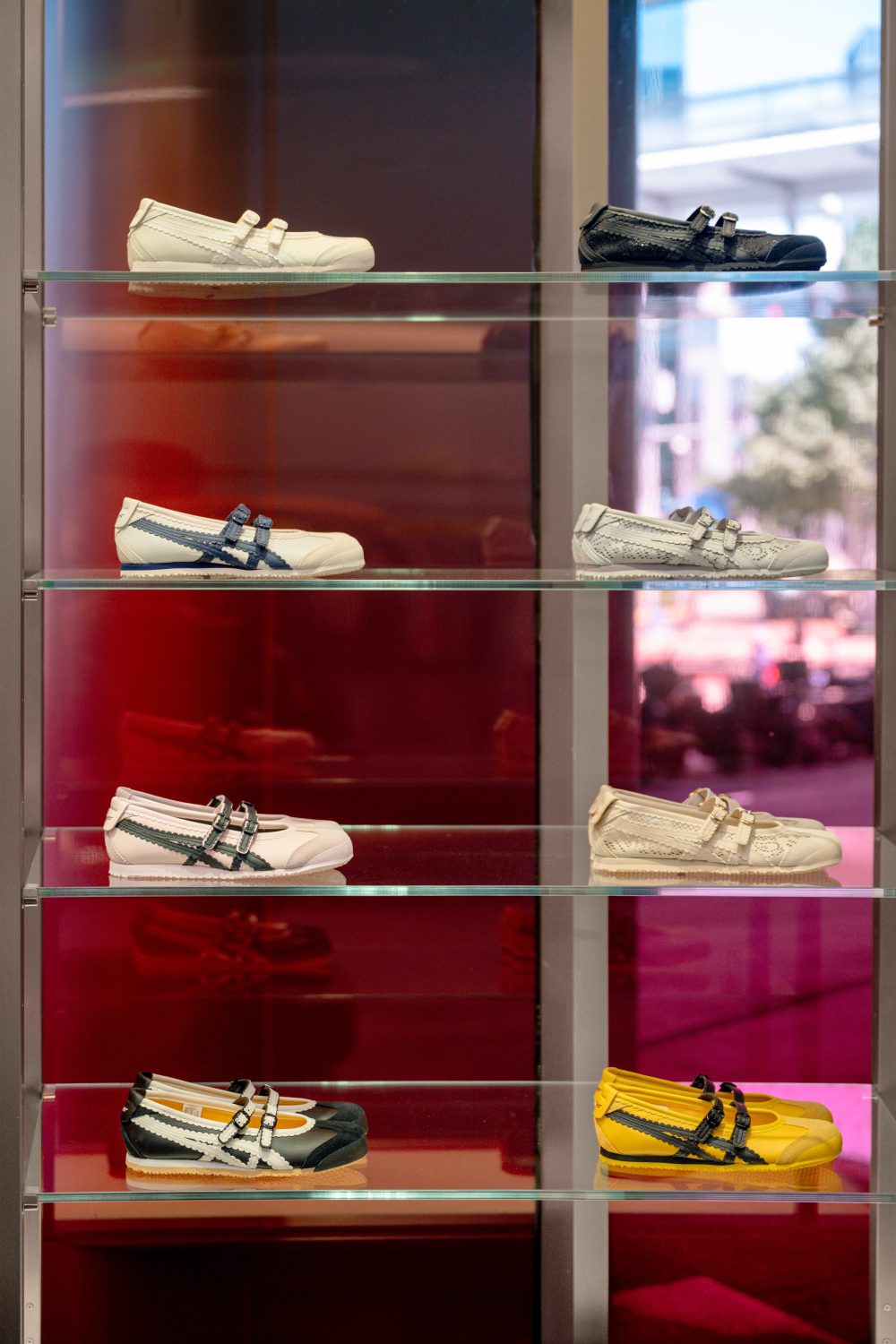
"Young women are one of the important growth drivers." Kanome believes that these consumers pay more attention to fashion, styling and quality, and Contemporary's downplaying of overt logos and stronger fashion attributes precisely respond to this demand.
Product boundaries are also expanding. In addition to footwear, Onitsuka Tiger now covers ready-to-wear, bags and accessories, and has further extended into lifestyle products such as fragrances, eyewear and designer toys.
"Large stores can display more categories and let consumers see more choices," Kanome explained. Three to five years ago, many Onitsuka Tiger stores were small and mainly displayed footwear; now that large stores have emerged, more apparel, bags and accessories and other non-footwear products can be placed in front of consumers.
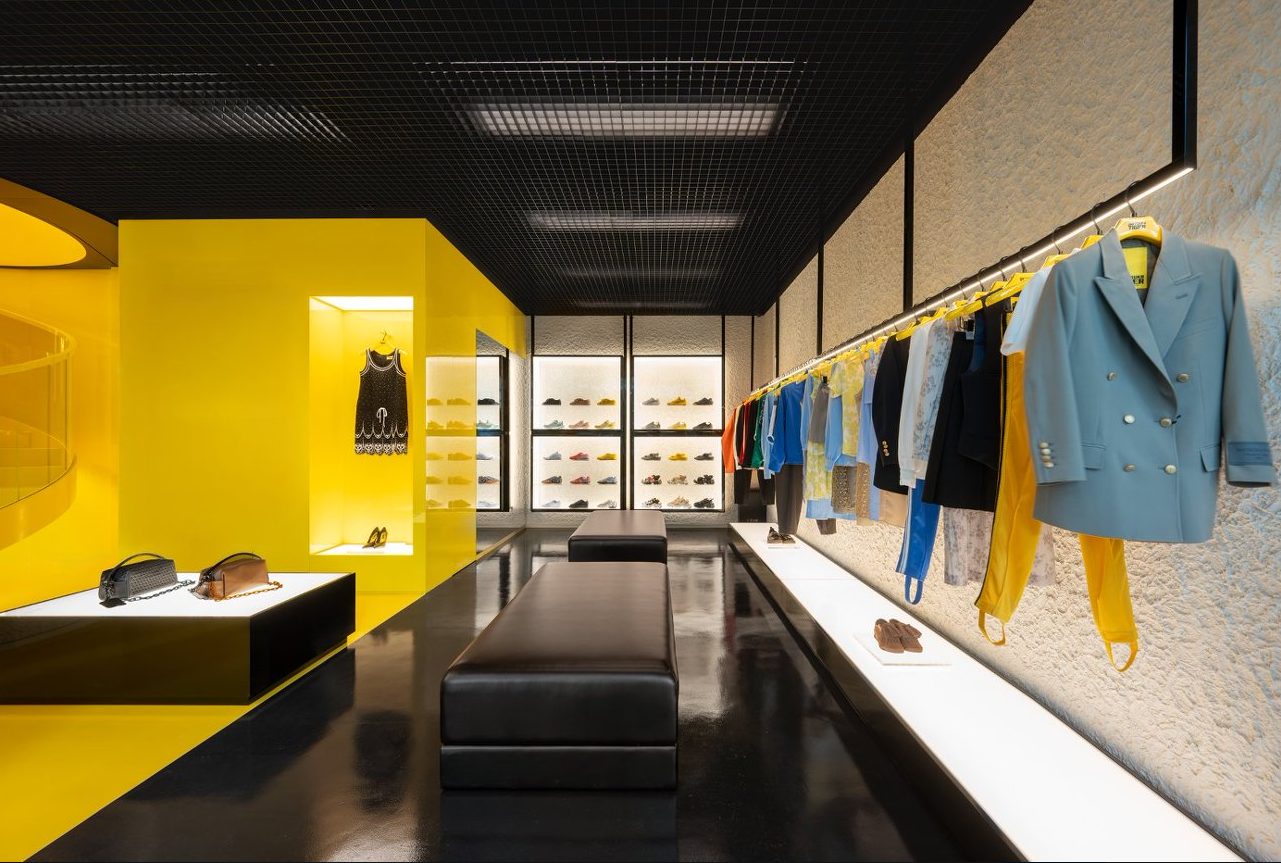
Therefore, the role of MEXICO 66 in the brand's product structure has also changed.
"Classic shoes such as MEXICO 66 have long been popular with the public; it will serve as a 'touchpoint' to reach various consumers. Once they feel good about it, they gradually try apparel, bags, fragrances and other categories," Kanome said. "We hope consumers discover Onitsuka Tiger because of MEXICO 66, but ultimately stay because of the rich products and lifestyle."

From Runway to Everyday Life: Local Culture Becomes Part of Product Innovation
From MEXICO 66 to a rich product matrix, Onitsuka Tiger has completed expansion in "breadth"; but to truly deserve the identity of a "lifestyle brand," the brand must answer another question: how can premiumization avoid sacrificing "youthfulness" and "accessibility"?
This is also the balance between price bands and product strength — if premiumness is conveyed only by raising prices, the brand can easily become disconnected from young consumers; but if premiumness is created only through marketing hype, it is difficult to sustain. Onitsuka Tiger's solution is to split "runway language" and "craftsmanship" into two parallel product lines, and then use local culture to connect them with consumers' daily lives.
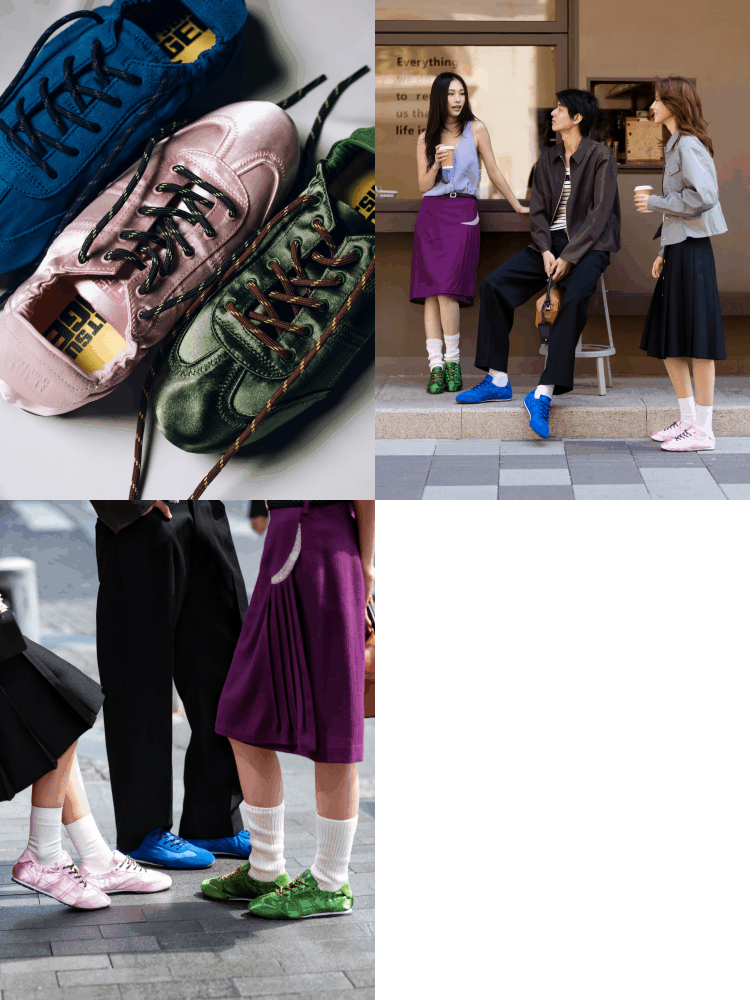
Represented by products such as PLABALA, the brand attempts to translate materials, silhouettes and decorative details from its fashion week collections into shoes more suitable for everyday wear.
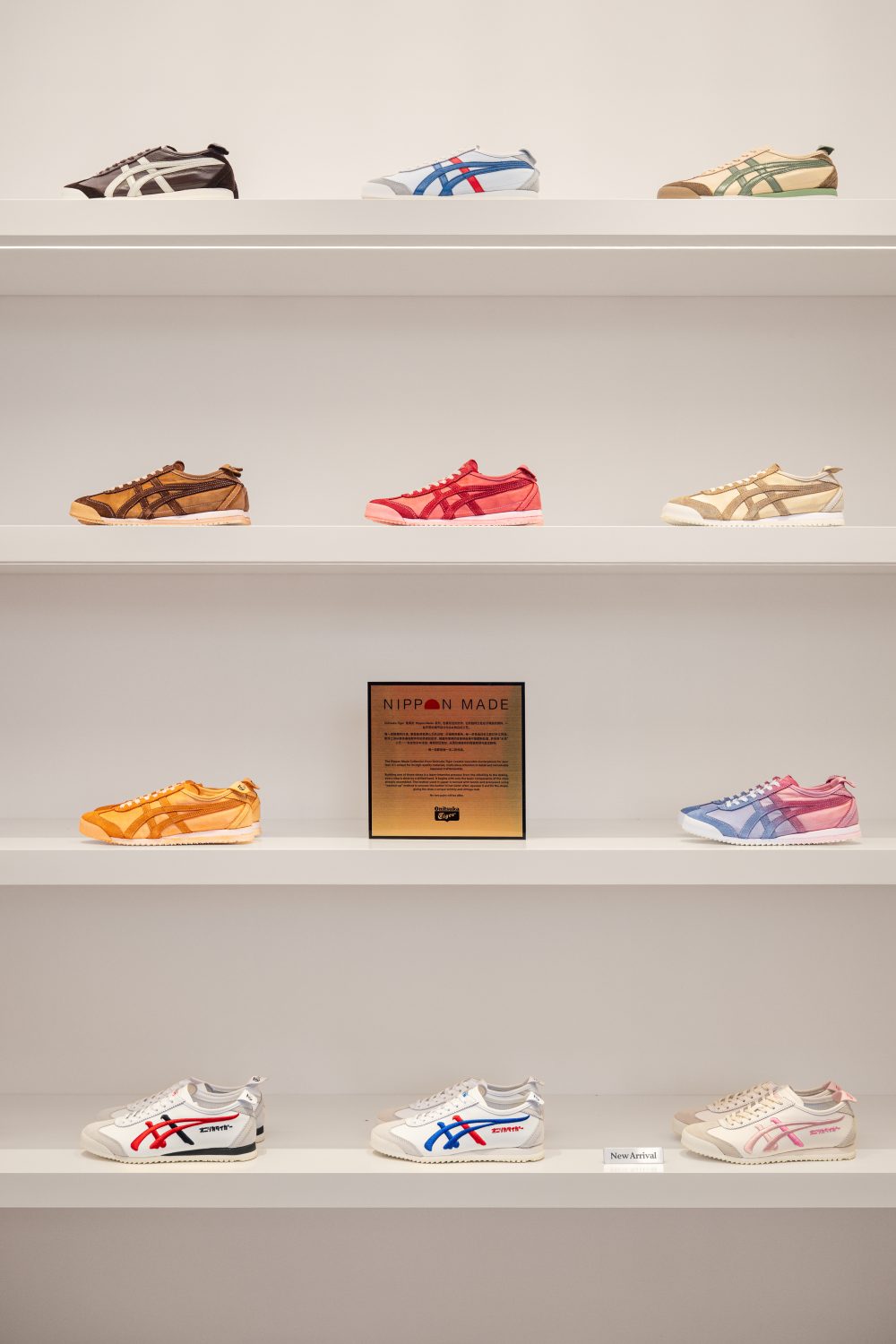
Another part of the products carries the brand's premium expression through origin, materials and craftsmanship. NIPPON MADE emphasizes Japanese manufacturing, while ITALIAN MADE reinterprets classic shoes such as MEXICO 66 and FABRE with Italian leather, Italian artisans and vintage processing. For such products, the premium consumers pay comes not only from the brand logo, but also from the origin, materials and production process itself. It responds to another consumer need: those willing to pay for quality and collectible value.
At the same time, the brand has begun to more actively handle the relationship between "global design language" and "Chinese market cultural expression." The CNY Chinese New Year collection is Onitsuka Tiger's attempt on this issue: it does not simply attach local elements to globally unified styles, but adds local cultural details within a unified design language. Kanome said that such products have not only received positive feedback from Chinese consumers, but also good responses in other Asia-Pacific markets.
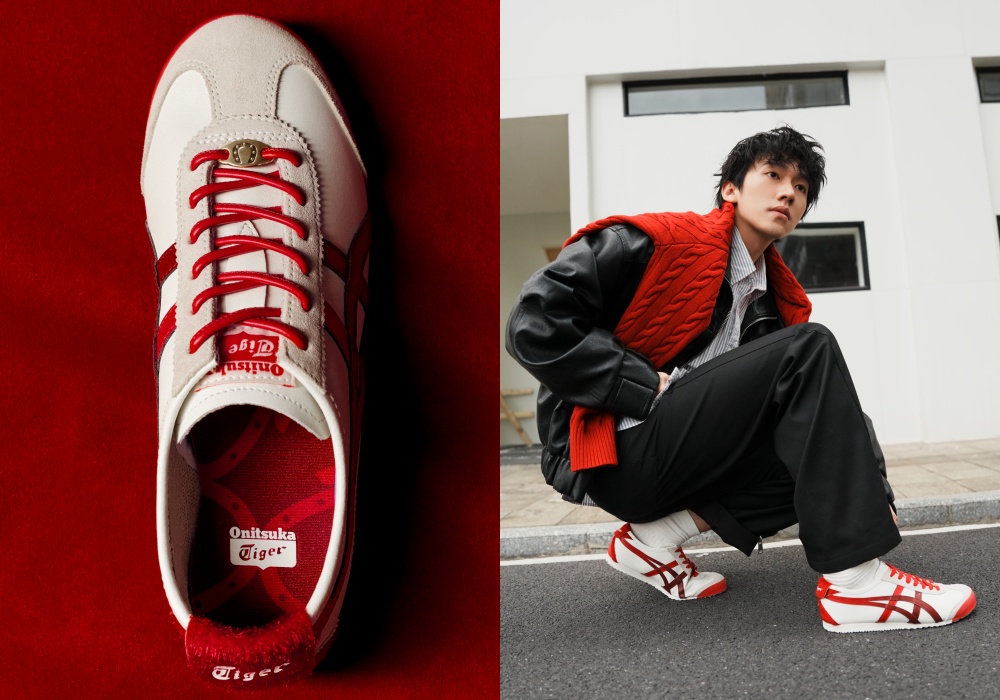
Therefore, for Onitsuka Tiger, localization is not a product strategy separate from the global brand system, but a component of the global design system: maintaining the brand's unified aesthetics and recognition while letting consumers in different markets see content related to their own culture.
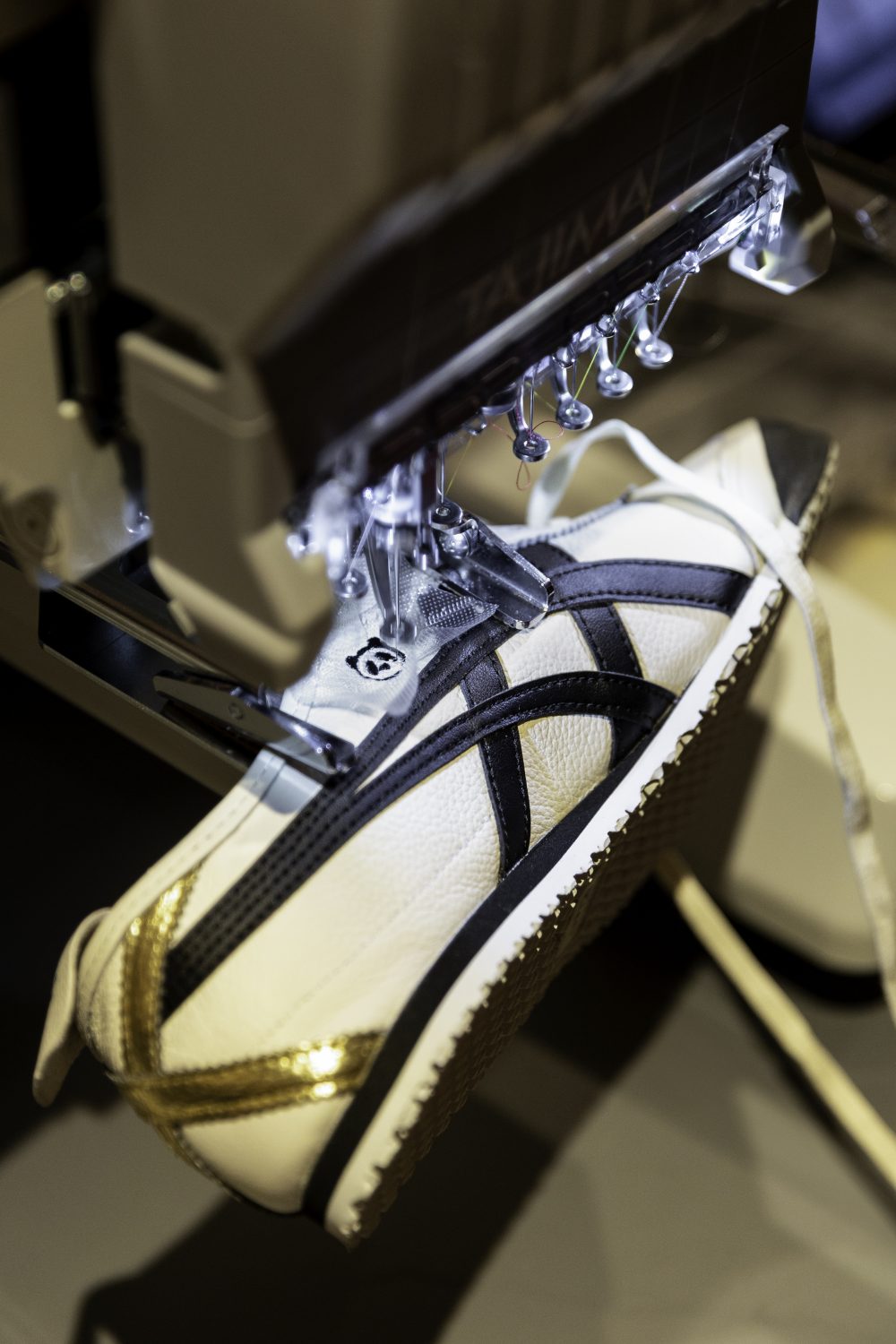
Onitsuka Tiger Chengdu IFS concept store features the first personalized custom embroidery space in Southwest China
CRM: No Longer Just Age and Gender, but "What Do You Like"
As the brand extends from a footwear-centric product structure to a broader lifestyle category, consumer operations become even more important.
In the past two years, Onitsuka Tiger's global sales have grown by more than 40% for consecutive years. Repurchase rates for footwear are usually lower than for apparel, and maintaining such high-speed growth requires continuously acquiring new consumers. Kanome revealed that the number of new customers in Onitsuka Tiger China's CRM (customer relationship management) system is also growing at around 40% annually.
Onitsuka Tiger China's CRM data comes from both online and offline. Kanome said the brand first divides consumer data by region, "and this data in turn assists our store opening plans."
In terms of consumer profiling, the brand hopes to further move away from looking only at age and gender. "We prefer to segment by the style attributes a person likes." For example, preference for a certain IP or a certain design style, and then tag different consumers with different "interest attributes."
This approach also explains why Onitsuka Tiger China relies less on traditional brand ambassadors and more on embroidery customization, quarterly styling salons, new product pop-ups and member experiences to connect with consumers.
Kanome believes that the core of this approach is not short-term traffic, but long-term relationships: "We always put users first."
CRM data also reflects the deeper reasons why consumers choose Onitsuka Tiger.
Kanome believes that one reason for the brand's global growth is that there is "no substitute." Especially in the price band of around RMB 1,000 to 1,500, there are not many direct competitors on the market that can simultaneously satisfy design, comfort and brand characteristics.
Another source of growth is the spillover from luxury consumption. "Many customers who used to buy luxury goods have changed their thinking and begun to lean toward our brand." In Kanome's view, Onitsuka Tiger is more like a "just right" brand — "it has functionality, design and comfort, and the price is reasonable, not as expensive as luxury goods that easily cost tens of thousands; everything is just right."
At the same time, Kanome has observed that in recent years some Chinese consumers' attention to product value is shifting from overt brand logos to materials, craftsmanship, history and design details.

"For us, this change happens to put the brand at the forefront of a new trend."
With nearly 80 years of history, craftsmanship and design aesthetics, Onitsuka Tiger hopes to use this to transform its previously relatively implicit brand assets into value that today's consumers can perceive through products and experiences.
Conclusion: A Ten-Year Vision for the Era of Independence
In 1949, Kihachiro Onitsuka founded the brand and named it "Tiger" — inspired by the beast that in his eyes combined strength and agility. Nearly 80 years later, this "tiger" has reached its moment of independence.
Looking ahead, Kanome has given a clear direction for the long-term plan in the Chinese market: continue to deepen product premiumization and high-end channels, deploy large flagship stores in key cities and migrate to high-end commercial districts; advance localized product development, integrating Chinese cultural details into the global design system; create original cultural content, conveying aesthetic propositions through store spaces, limited exhibitions and brand narratives; and refine member operations, shifting from age and gender profiles to style attribute tags to build longer-term user relationships.
As mentioned above, the renewed popularity of retro running shoes, consumers' shift from thick, high-cushion shoes to simpler, thin-soled shoes, and the spillover from luxury consumption are all concrete manifestations of the expansion of the "light-luxury sports fashion" niche over the past two years — Onitsuka Tiger's position is precisely in this niche, continuously balancing retro heritage with modern luxury.
Independence does not mean separation from ASICS, but rather the hope that Onitsuka Tiger can, with a clearer brand identity, transform the relatively implicit retro DNA, craftsmanship and design aesthetics of the past nearly 80 years into growth momentum for the next stage.
In a sense, this is more like a "development" of brand identity — letting that "tiger," which has always existed but long hidden within the ASICS system, step into the spotlight in its complete form for the first time.
|Image source: Onitsuka Tiger
|Editor: Xiaoyue