In summer 2026, the swimwear collection jointly launched by British luxury brand Burberry and independent swimwear brand Hunza G became a focal point of the global fashion industry. Notably, this collaboration is not a simple brand licensing deal, but Burberry's first in-depth co-creation with a pure-play swimwear brand in the vertical sector.
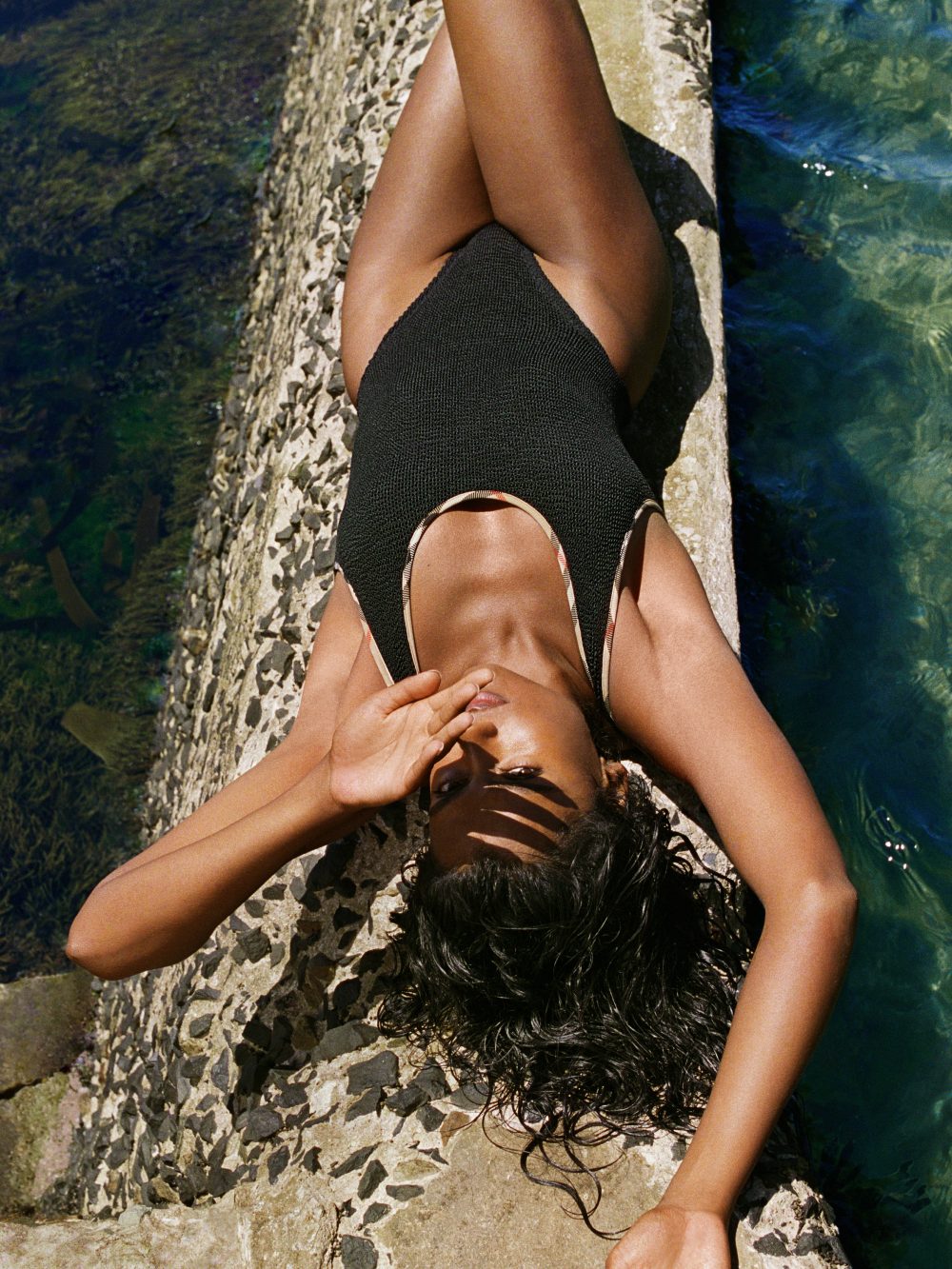
Previously, Burberry's forays into swimwear mostly appeared as scattered pieces within fashion collaborations, such as the bikinis or swim trunks released in its partnerships with Vivienne Westwood or Gosha Rubchinskiy.
This time, Chief Creative Officer Daniel Lee incorporated Burberry's iconic check as trim into Hunza G's signature The Original Crinkle™ fabric (hereafter TOC fabric). This reliance on patented technology from the vertical sector powerfully confirms the unique advantage Hunza G has established in the swimwear category.
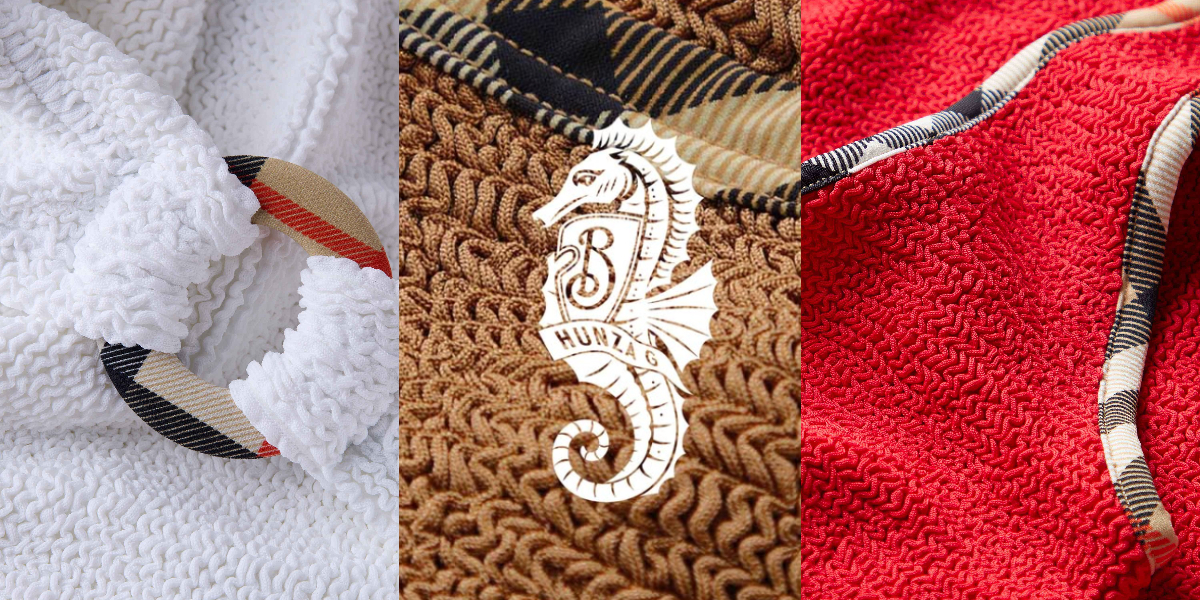
In overseas markets, Hunza G has grown into a swimwear brand with considerable recognition and has long maintained stable market heat. It is worth noting that more than half of the brand's sales come from repeat customers. Celebrities at home and abroad such as Rosie Huntington-Whiteley, Hailey Bieber, Kendall Jenner, Dua Lipa, Karena Ng, Charlene Choi, and Zhong Chuxi have all publicly worn or shared the brand's products, recommending Hunza G to fans of swimming and other water sports, noting that it "doesn't cling or turn sheer in water and is highly inclusive." As a result, Hunza G has been dubbed by social media as "the swimwear brand half of Hollywood wears." Overall, its competitive edge comes mainly from two aspects:
First, a breakthrough in fabric technology: TOC crinkle fabric completely overturns the sizing logic of traditional swimwear, truly achieving "One Size" fit;
Second, a repositioning of the product: in consumers' minds, Hunza G is not merely a functional piece for swimming, but a fashion item with a simple, classic design that can freely adapt to multiple scenarios such as seaside vacations and urban daily wear. Driven by the "Swimwear as Outerwear" trend, this positioning feels especially apt. This durable, timeless design approach also leaves room for the brand to extend from swimwear into ready-to-wear.
So how exactly did Hunza G grow from a vintage fashion symbol into an industry benchmark that resonates with contemporary women's aesthetics? Luxe.CO traces the brand's development trajectory in this article, introducing Chinese consumers to the brand that is reshaping the rules of the swimwear industry.
A Swimwear Brand Driven by Fabric Innovation
TOC fabric is regarded by the industry as a special material with a craftsmanship barrier, and it is also Hunza G's core competitive moat. This fabric is not an ordinary stretch material on the market, but a seamless, ultra-high-stretch tubular knit woven on professional circular knitting machines. In production, the equipment is fitted with thousands of precision-calibrated needles, with more than 9 million stitches of weaving craftsmanship per single garment. The high-density knitting process gives the fabric both strong stretch and stable recovery.
Thanks to this high-stretch property, although the swimwear is one-size, it accommodates body types from US size 2 to 12 and adapts to figure changes during different stages such as pregnancy and postpartum. Every woman deserves to feel her most confident self, no matter what stage her body is in.
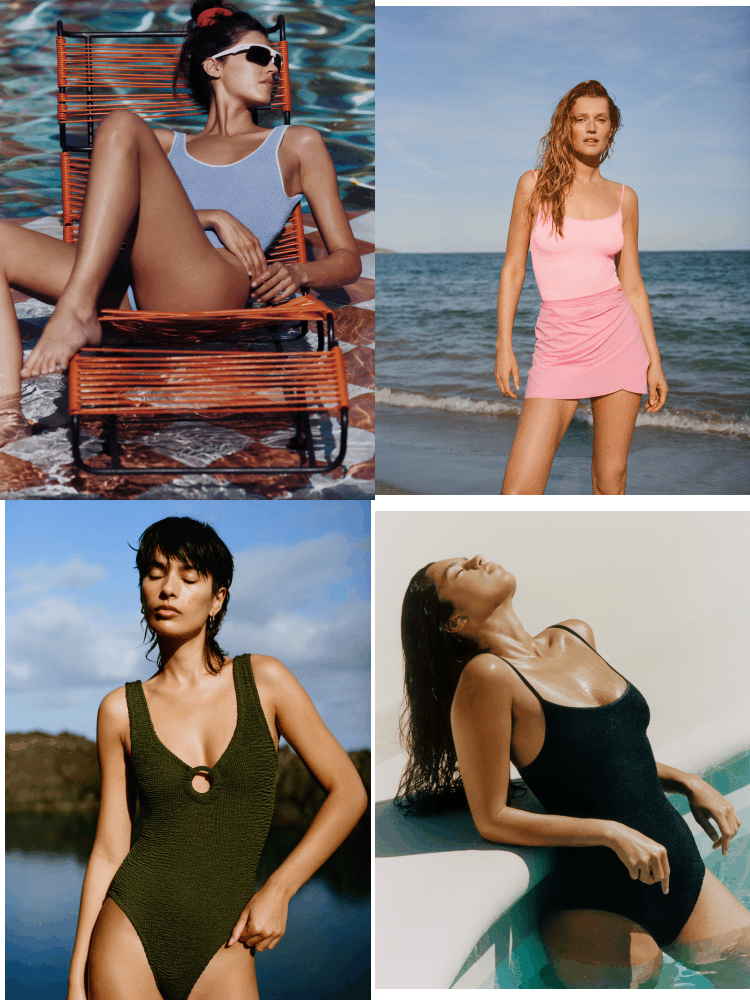
Unlike traditional swimwear that relies on fabric compression and structural shaping to flatter the figure, Hunza G focuses on a "second skin" feel that hugs the body, following body lines instead of deliberately correcting the figure. Through fabric elasticity, pattern construction and color pairing, it creates a styling aesthetic that is naturally relaxed yet confident.
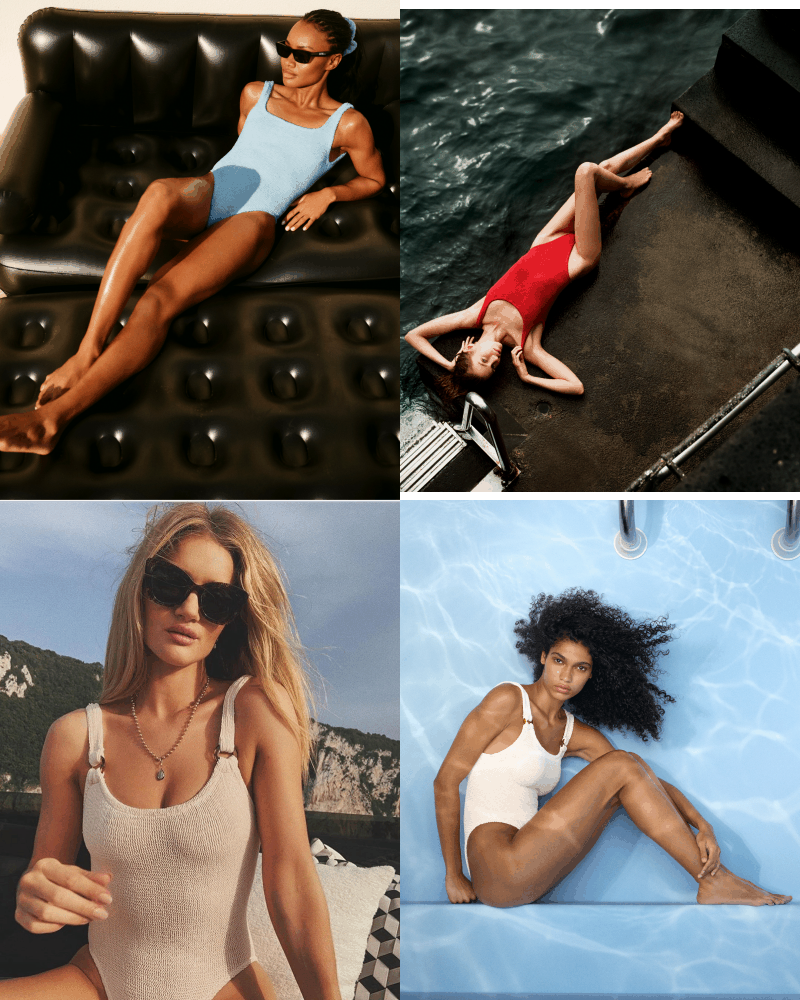
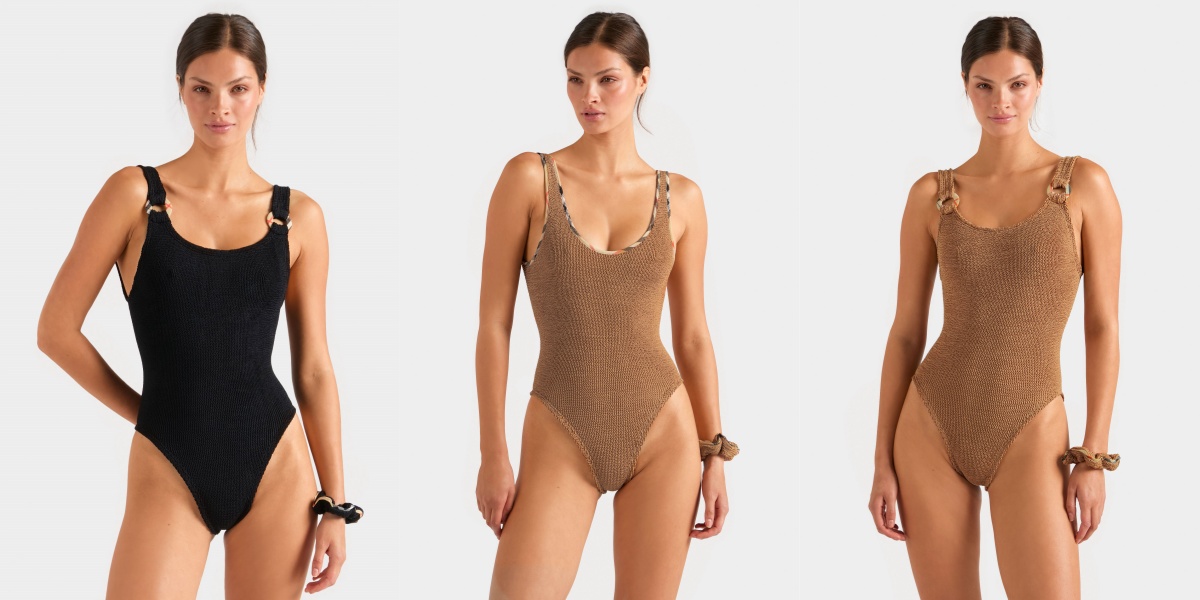
Among Hunza G's classic designs, the "Square Neck" and the Domino, which rose to fame thanks to Rosie Huntington-Whiteley, have become popular choices in the global market for their simple, chic design and comfortable wearing experience.
Market Recognition Driven by Word of Mouth
The "effortless chic" that Hunza G advocates and its respect for body inclusivity have earned it high organic awareness among stars and celebrities. The brand's breakout relies more on accumulated user word of mouth than on large-scale commercial marketing spend. Supermodel Rosie Huntington-Whiteley once shared her outfits on social platforms, which at one point caused a surge in traffic to the official website and crashed its servers; Hailey Bieber, Kendall Jenner, Dua Lipa and other global top stars are also loyal fans of the brand.
This overseas influence has gradually spread to the domestic market. Through social platform dissemination, Hunza G, priced between 1,500 and 2,500 yuan, has begun to enter the shopping lists of middle-class Chinese women. Celebrities such as Karena Ng, Zhong Chuxi, Zhou Yutong and Charlene Choi have worn the brand spontaneously, giving it a certain scale of vertical discussion even before it formally entered the Chinese market.
Take Karena Ng as an example. Since 2021, she has worn Hunza G swimwear multiple times and spontaneously shared related outfits on platforms such as Xiaohongshu, including the Hunza G x Burberry collaboration, and was invited to attend the dinner held in Paris for the collaboration.
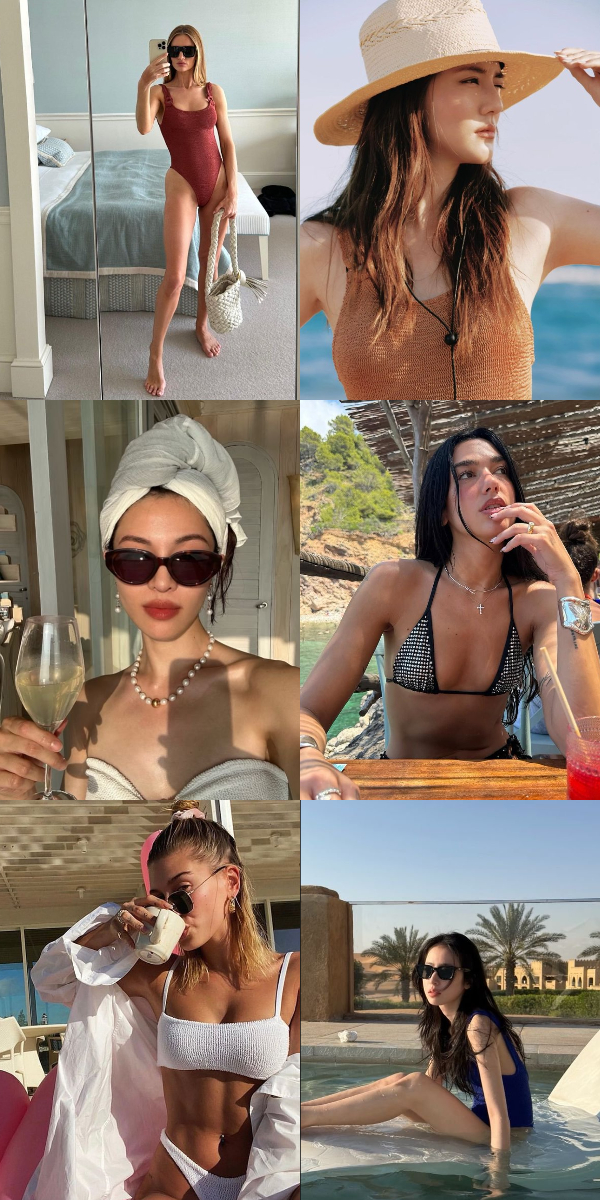
Celebrity images from the internet
On social platforms such as Xiaohongshu, some users have offered more specific reviews based on their actual wearing experience. One user shared: "It has both a beach vibe and works for everyday outings. Add a shirt or shorts and you can easily switch scenarios." Other comments point directly to the brand's presence in the "swimwear as outerwear" conversation—"Have you been flooded with swimwear-as-outerwear looks? Hunza G's classic crinkle fabric stands out." For consumers who value fabric texture, the brand's signature seersucker material has also become a memorable point. One user wrote: "The distinctive seersucker material—I personally don't like slippery swimwear fabrics. This is my first time buying a one-piece this year; I can usually wear it as a top, with a big open back, and paired with high-waisted shorts it looks super beautiful."
For contemporary women who value wearing comfort, this design—which does not rely on heavy padding or rigid shaping structures but naturally follows the body's curves through fabric—precisely echoes the current pursuit of "relaxed ease" and "making peace with one's body." The brand uses bold colors to suit diverse skin tones, insists on timeless silhouettes, and continuously conveys affirmation of sizing and body types. This product-driven approach to communication has brought it high customer loyalty in the highly competitive swimwear market.
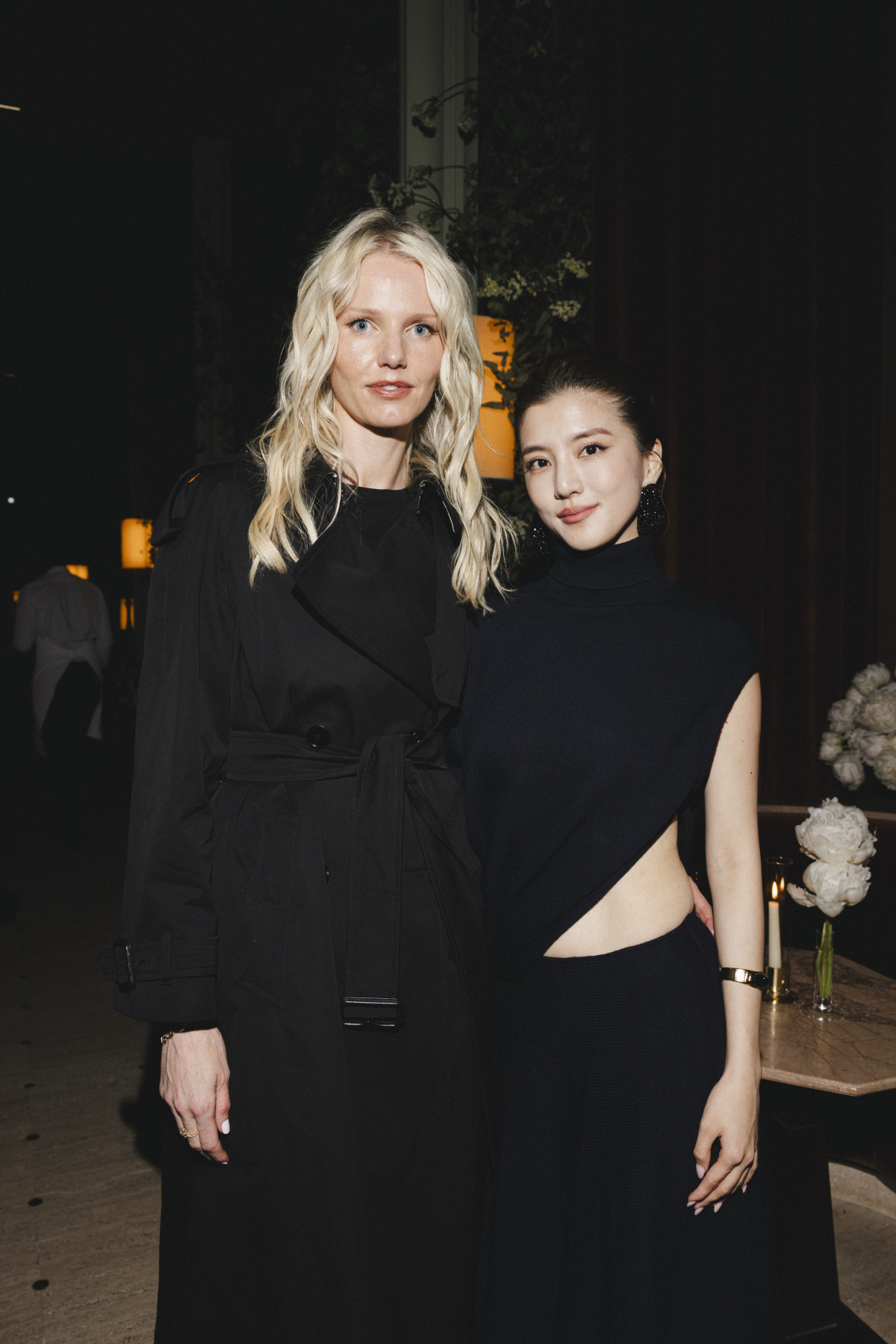
Hunza G Creative Director Georgiana Huddart with Karena Ng. Ahead of this year's 618 shopping festival, Hunza G did an influencer livestream collaboration with Karena Ng on Xiaohongshu. During the livestream, the sell-through rate of Hunza G's classic swimwear "Square Neck" and Domino reached 87-100%.
Female Power and Brand Revival
Looking back at its development, the relaunch and growth of Hunza G is a typical case of combining the inheritance of vintage aesthetics with modern commercial operations.
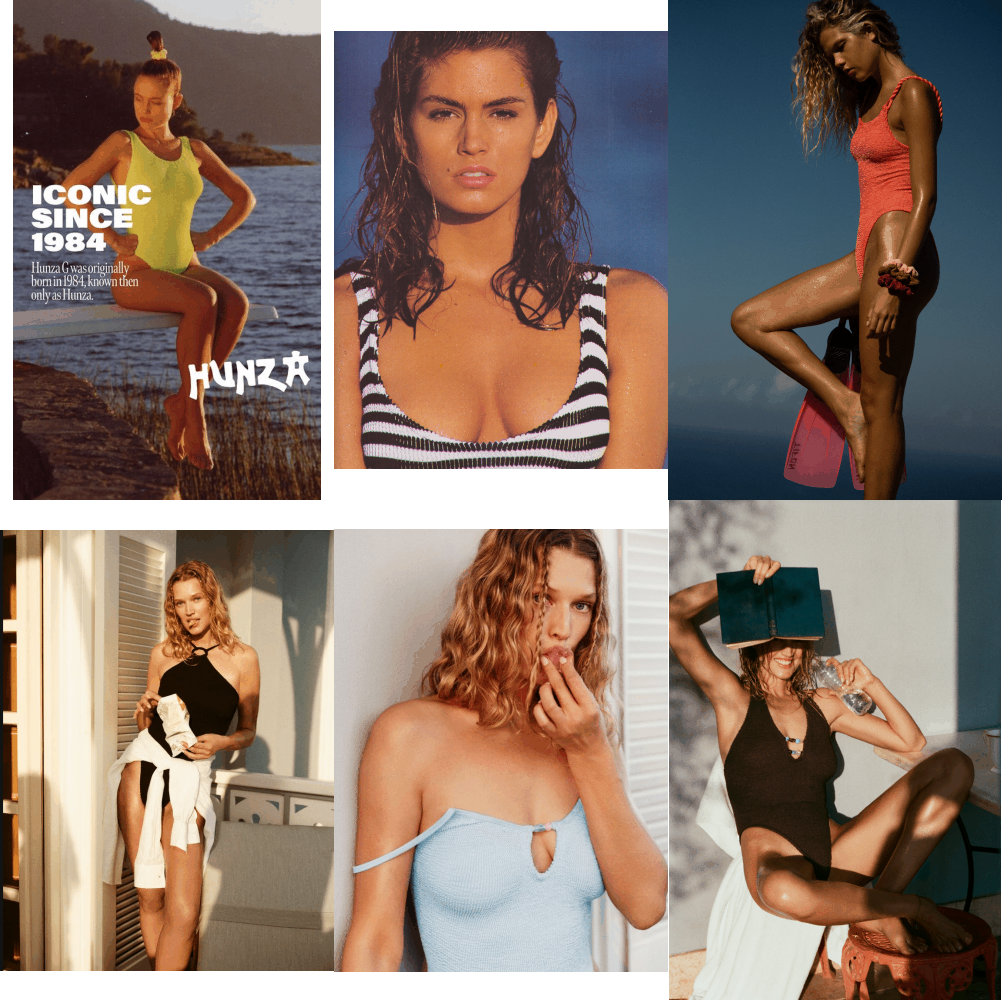
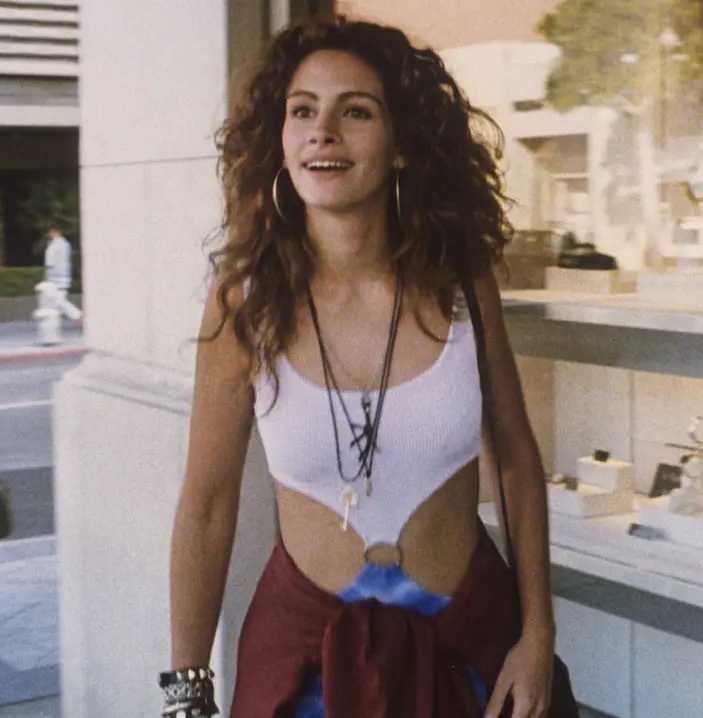
The brand was founded by Peter Meadows in 1984 and rose to fame in the 1990s thanks to Julia Roberts' iconic look in Pretty Woman.
Current Creative Director Georgiana Huddart has deep ties to the brand. Her mother was the first assistant to legendary fashion editor Grace Coddington, and she grew up watching her mother wear the pink crinkle swimsuit, witnessing how this piece accompanied her through different stages of life.
At 19, Georgiana Huddart偶然 discovered a whole rack of vintage Hunza products in a vintage store in Berlin, planting an important seed for this loyal fan to relaunch the brand in 2015.
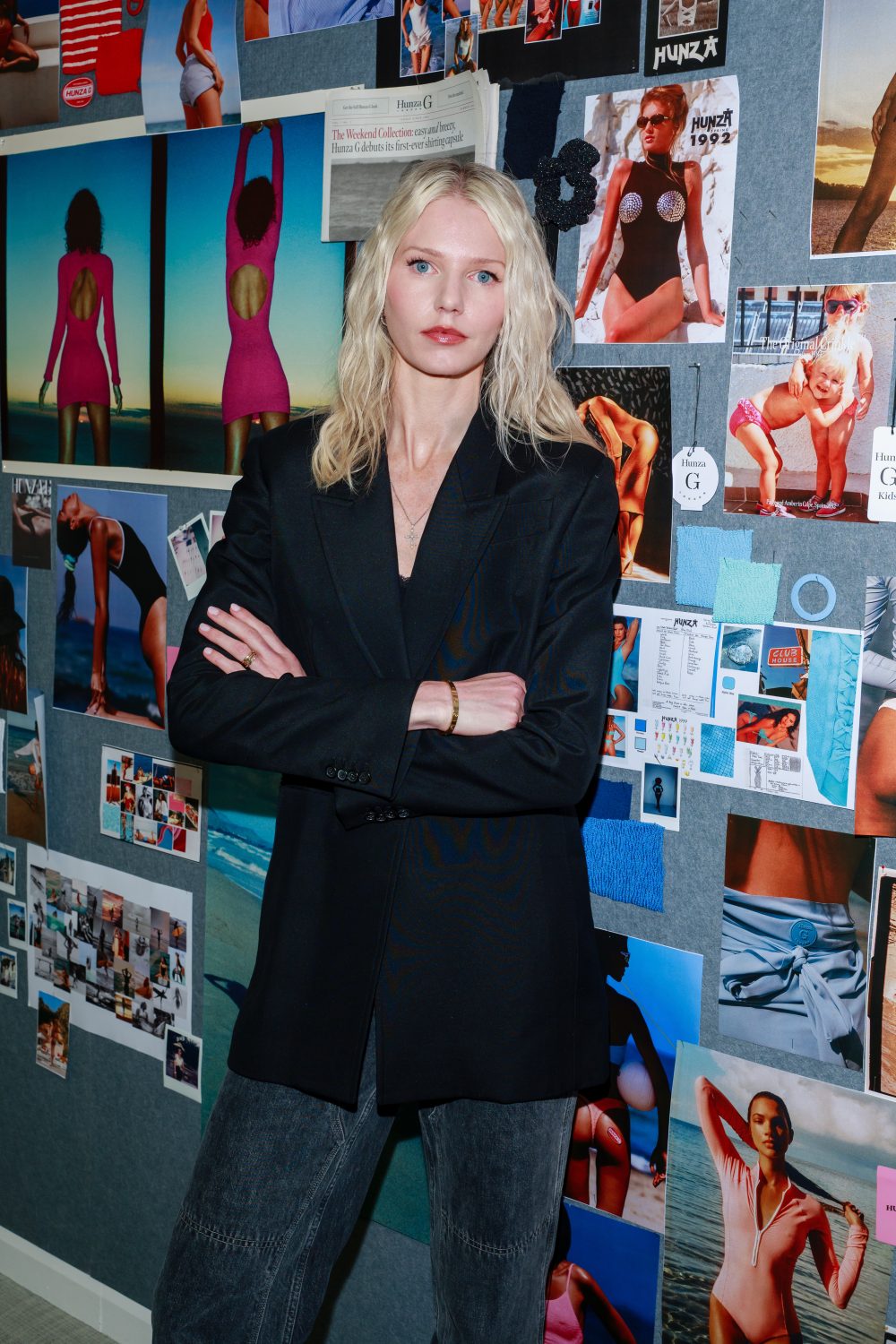
Georgiana Huddart's career has spanned multiple facets of the fashion industry: she has worked as a model, interned at British Vogue, and even washed dishes in a bar and worked as a cleaner at Wimbledon to make a living. These real-world work experiences have given her a distinctly pragmatic style in running the brand. In the early days of the business, Hunza G operated entirely on self-raised funds. Georgiana Huddart once mentioned in an interview that, at a time when the role of creative director often carries a socialite aura, she believes that returning to the office to refine products with the team is the key to the brand's long-term standing.
Today, as the soul of the brand, Georgiana Huddart is fully responsible for design direction, modernization and the continuation of the brand's spirit, transforming its original 1980s vintage DNA into a contemporary brand that combines performance support with emotional resonance.
China Market Layout and Long-Term Growth Potential
Currently, Hunza G has built high-quality customer bases across global markets as the foundation for brand business growth, and expects to double its global business scale in the coming years.
In terms of channel building, in addition to direct sales through the brand's official website, it also covers international high-end retail channels such as Net-a-Porter, Harrods and Selfridges, and has established extensive cooperation with boutique buyers and department store channels in key markets.
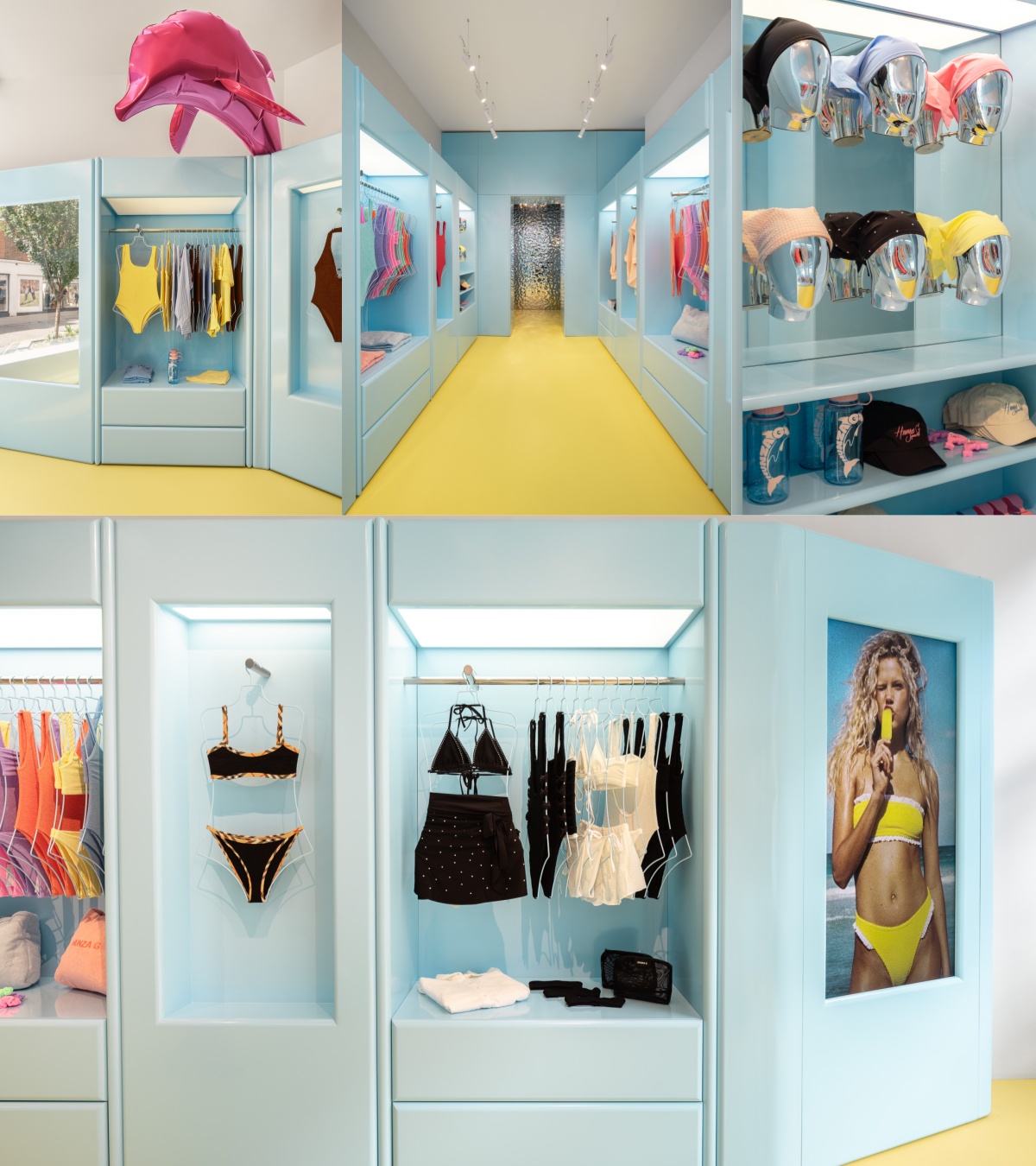
The brand recently opened its second limited-time pop-up store in the core area of Marylebone, London. London's top spatial design team Studio Boum created a chic summer space themed around the "underwater world," offering consumers an immersive presentation of a rich array of swimwear, accessories and ready-to-wear as well as the brand philosophy.
Against the backdrop of global expansion, Hunza G has recently begun to formally lay out the Chinese market. Following its official Xiaohongshu store, the brand's official Tmall flagship store recently opened, offering not only classic styles and the latest 2025 summer swimwear and ready-to-wear collections, but also two classic styles from the Burberry collaboration, Faye and Domino.
This efficient rollout of a global retail network is largely thanks to the minimalist inventory management brought by its "one size" strategy. Since there is no need to stock multiple sizes for a single style, Hunza G's SKU (stock keeping unit) pressure is significantly lower than that of traditional peers, and asset turnover is lighter, enabling it to respond more quickly and flexibly to fluctuations and demand in emerging markets such as China.
In addition, the brand has not rested on a single fabric technology advantage. Based on direct-to-consumer (DTC) data accumulation and observation of contemporary women's lifestyles, Hunza G continues to develop innovative fabrics, such as UV-protective (UPF) functional fabrics and seersucker that is both quick-drying and wrinkle-resistant.
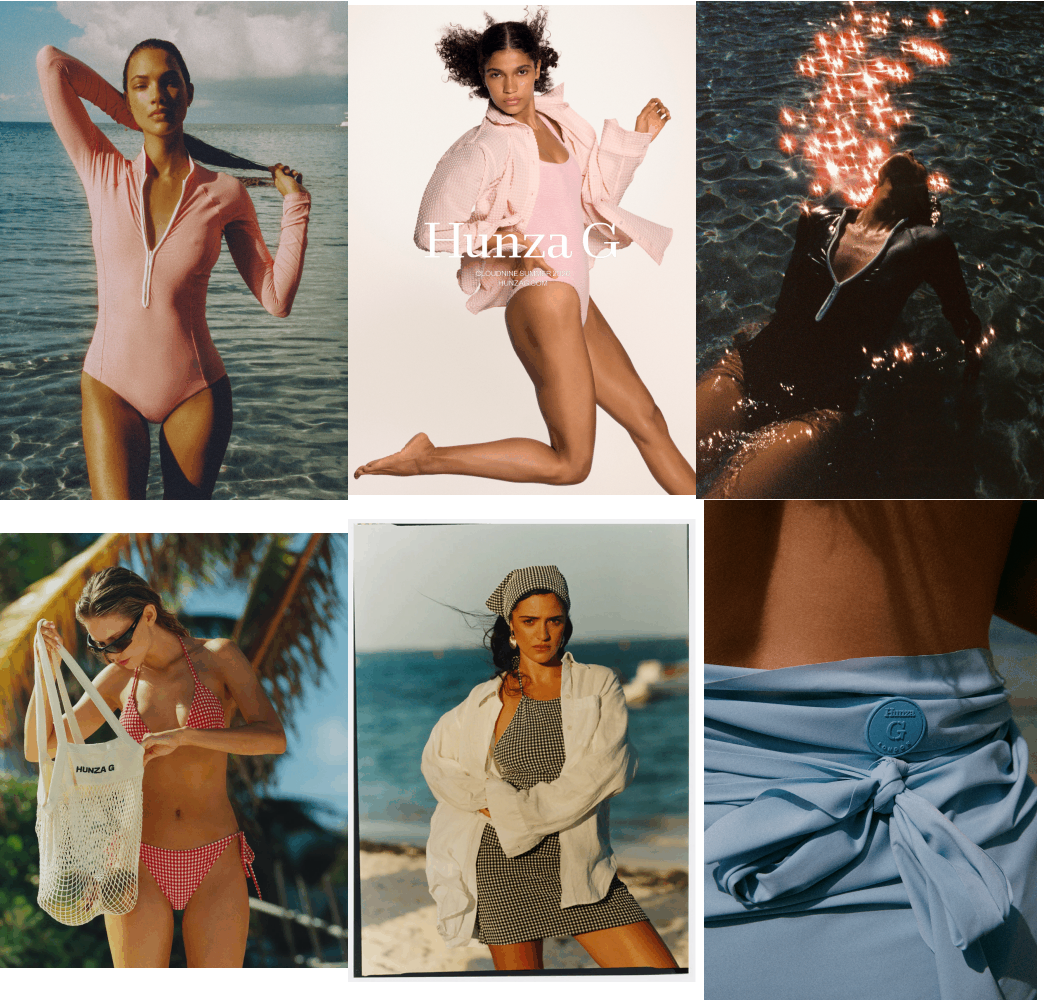
These technical attempts have helped the brand gradually break free from the limitations of "seasonal items" and "specific scenarios." At present, the product line has extended into women's ready-to-wear (such as the representative Gingham check series), responding to the wearing needs of contemporary Chinese women across scenarios such as vacations, commuting and urban socializing through easy-going everyday pieces.
From a broader perspective, Hunza G's global push is standing at the intersection of several industry trend lines. Amid the ever-heating "swimwear as outerwear" wave, popular culture represented by the hit TV series The White Lotus is also driving the spread of resort fashion aesthetics. The niche swimwear and resort wear worn by characters in the show have triggered a large number of searches and follow-up purchases among viewers, reflecting consumers' yearning for a resort lifestyle. Under the combined force of these trends, swimwear is transforming from a purely functional category into an independent component of a woman's wardrobe with styling value and style expression.
With the growth of domestic demand for resort and leisure wear, as well as consumers' emphasis on a "long-termist" wardrobe, niche brands like Hunza G that have professional heritage while presenting a contemporary aesthetic perspective are expected to reach a broader audience in the Chinese market. They offer women new options in segmented categories such as swimwear and light ready-to-wear, and also align with people's objective expectations for functional fabrics, timeless design, size inclusivity and long-term practical value.
| Image source: Hunza G, Pretty Woman stills
| Editor: Maier